Reviewed · MUSEUMS
The Museum of Flight Entrance Ticket
The Museum of Flight gives you something rare: the chance to walk through aviation history rather than simply view it behind glass. You can sit in a Boeing 747 cockpit, board historic aircraft, study a full-size space shuttle training mockup, and move between six buildings on Seattle’s oldest airport site.
I like the sheer variety, from the Red Barn and early Boeing story to Concorde, Air Force One, fighter jets, and space hardware. I also like the museum’s hands-on approach, with flight simulators, interactive displays, and activities that keep children involved. The main drawback is simple: the advertised space shuttle trainer deck has been closed since the pandemic, so check its current status before you go.
In This Review
- Key points to know before you go
- Why the Museum of Flight deserves a place on your Seattle schedule
- Start at the Red Barn and Boeing’s early years
- The Great Gallery puts 43 aircraft overhead
- Walk through Concorde, Air Force One, and the 747
- Space exhibits connect flight with exploration
- Hands-on exhibits make this more than a display hall
- The outdoor bridge adds an unexpected Seattle view
- How much time should you allow?
- Is the $29 admission good value?
- Who will enjoy this most?
- Booking, opening hours, and cancellation details
- Should you book the Museum of Flight?
- FAQ
- How much does admission to the Museum of Flight cost?
- How long does a visit usually take?
- What are the museum’s opening hours?
- Are simulator tickets included?
- Is the 3D movie included in admission?
- Can I see a Space Shuttle trainer?
- Can I see Mount Rainier from the museum?
- Is the museum suitable for children?
- What is the cancellation policy?
Key points to know before you go
- More than 160 aircraft and spacecraft: Plan on at least two to three hours, and much longer if you read the displays closely.
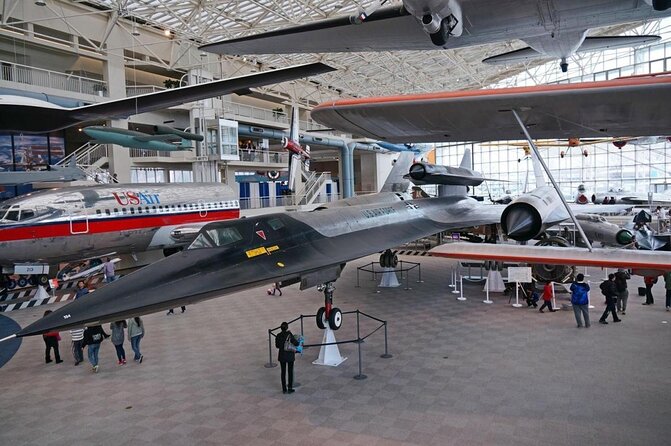
- The Great Gallery: A six-story glass hall holds 43 aircraft, including a rare M-21 Blackbird spy plane and military jets.
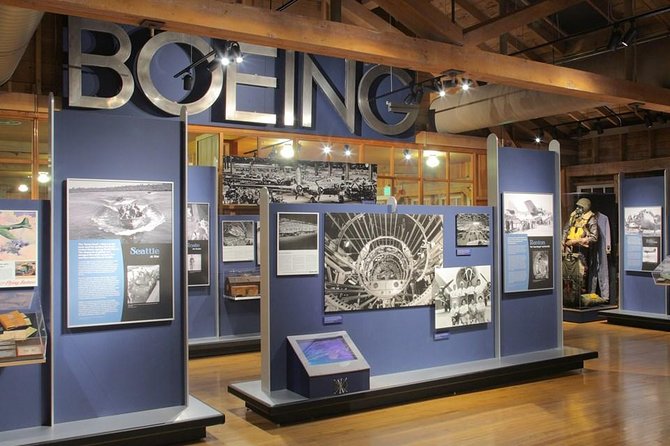
- Historic Boeing buildings: The Red Barn tells the company’s early story, while the original Boeing factory gives the visit a strong local connection.
- Rare aircraft access: You can walk through or around notable aircraft such as Concorde, Air Force One, a 747 development aircraft, and a 787 Dreamliner cockpit.
- Extra-cost activities: Simulators and the flight-themed 3D movie are not part of the admission ticket.
- A useful outdoor viewpoint: The T. Evans Wyckoff Memorial Bridge offers views toward Seattle-Tacoma International Airport and Mount Rainier on clear days.
Why the Museum of Flight deserves a place on your Seattle schedule
Seattle is closely tied to aircraft production, and this museum makes that connection easy to understand. It is located on a 23-acre campus at the city’s oldest airport, with six buildings devoted to aircraft, space travel, war history, engineering, and Boeing’s beginnings.
At $29 per person, the admission is reasonable if you plan to spend three hours or more inside. The museum is large enough that a quick visit can feel rushed. Some people see the main displays in about two hours, while others spend four or five hours and still leave with more to see.
I would not treat this as a small rainy-day museum you can squeeze into a spare hour. It is a major attraction with enough material for a half-day, and serious aviation fans could spend most of a day here.
More Seattle attraction tickets:
- Seattle: Space Needle & Chihuly Garden and Glass Ticket
★ 4.7 · 1,890 reviews - Space Needle and Chihuly Garden and Glass Combination Ticket
★ 4.5 · 1,551 reviews - Seattle CityPASS®: Save up to 46% at 5 Top Attractions
★ 4.6 · 742 reviews
Start at the Red Barn and Boeing’s early years
The Red Barn is one of the most important stops for understanding why this museum belongs in Seattle. This original Boeing building traces the company’s early development and gives context to the aircraft you see later in the visit.
The building helps turn a collection of machines into a story. You are not just looking at large planes. You are seeing how a local aircraft company grew from its first work into the global manufacturer associated with the Pacific Northwest.
The World War I and World War II displays add another layer. Period aircraft and historical material show how quickly aviation changed once aircraft became tools of war. These sections are especially useful if you enjoy military history, but the displays also work for families because the machines themselves are striking at close range.
Allow enough time here to read. The museum rewards curiosity, but you can also move quickly through the galleries if your main goal is to see the largest aircraft.
The Great Gallery puts 43 aircraft overhead
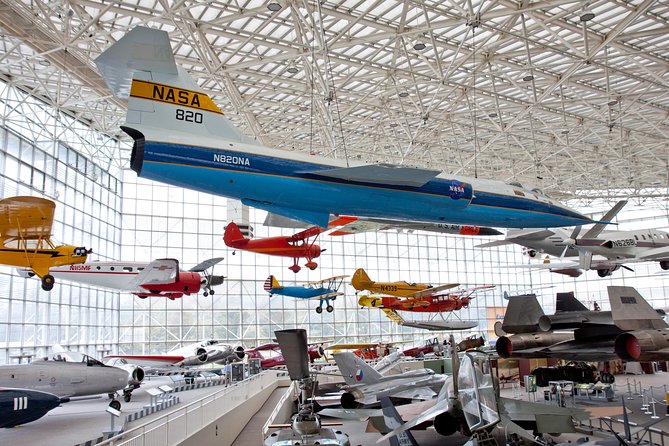
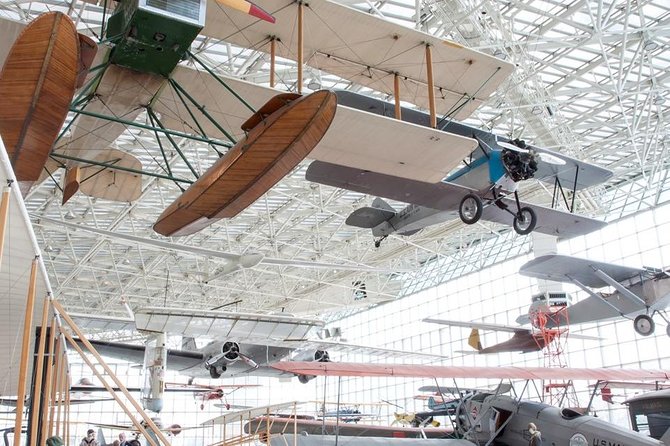
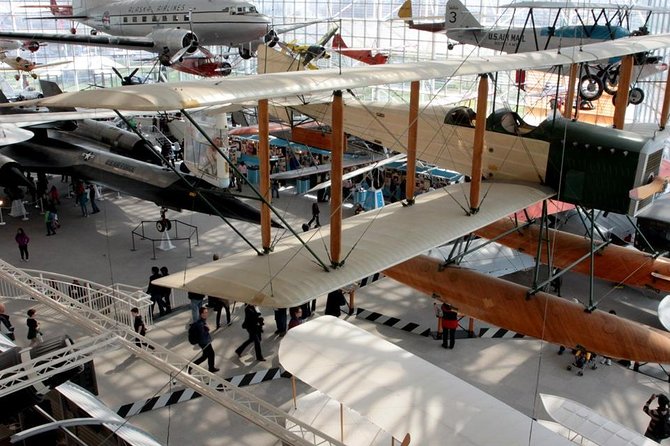
The Great Gallery is the museum’s visual centerpiece. This six-story glass building contains 43 aircraft dating from the 1920s to the present, suspended and displayed in a space that makes even familiar aircraft seem enormous.
The scale matters. Aviation photographs rarely communicate the size of a jet fighter or the delicate structure of an older aircraft. Here, you can study wings, landing gear, engines, and cockpit shapes from several angles.
Look for the M-21 Blackbird, a rare spy plane with a dramatic, highly specialized design. Korean War and Vietnam War-era fighters add a military focus, while the mixture of aircraft from different decades lets you compare the pace of technological change.
This is a good first major hall because it gives you a clear sense of the museum’s range. It is also one of the best places for photographs, although the glass architecture can create reflections depending on the light.
Walk through Concorde, Air Force One, and the 747
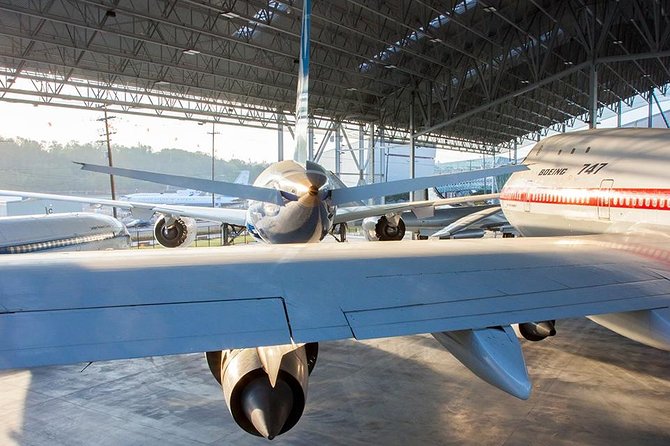
The museum’s large aircraft displays are where the visit becomes physical. You can do more than look at an airliner from the floor. Several aircraft can be entered, allowing you to see the narrow passages, cockpit layouts, seating areas, and working spaces that passengers normally never reach.
Concorde is a natural highlight. The supersonic passenger aircraft represents a short, remarkable chapter in commercial aviation. Its cabin and controls show the tradeoffs required to fly at extreme speed, and its presence gives the museum a strong international dimension.
The Air Force One aircraft used by President Nixon and earlier presidents offers a different kind of interest. It connects aviation with American political history and lets you see how presidential travel once operated. It is not simply a luxury jet display. The aircraft reflects the security, communication, and practical demands of government travel in an earlier era.
The first flight-worthy Boeing 747 is another major stop. The 747 changed long-distance air travel, and seeing its early development aircraft helps explain how unusual its size must have seemed when it was introduced.
The collection also includes a 787 Dreamliner cockpit. You may not be able to explore every part of every aircraft in the same way, but the cockpit display gives you a useful look at how modern flight decks differ from earlier designs.
More museums in Seattle:
- Seattle: Seattle Art Museum Admission Ticket
★ 4.8 · 67 reviews - Seattle: The Museum of Flight Entry Ticket
★ 4.6 · 24 reviews - Museum of Illusions Seattle Admission Ticket
★ 4.0 · 9 reviews - Seattle: National Nordic Museum Entry Ticket
★ 4.3 · 6 reviews
Space exhibits connect flight with exploration
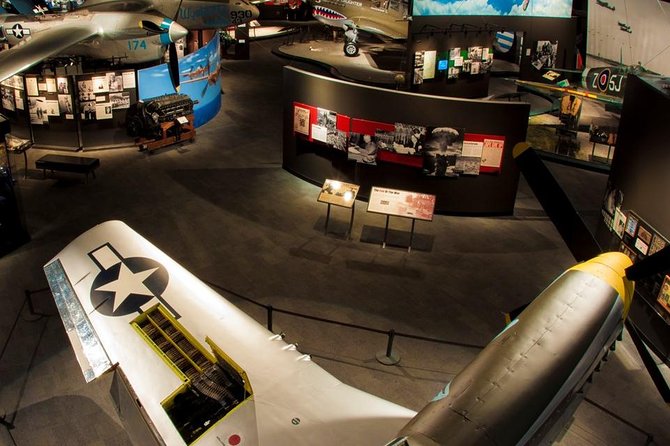
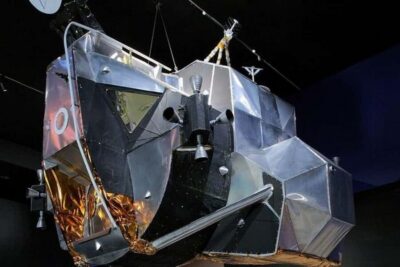
The space section broadens the museum beyond aviation. You can learn about the technology and risks involved in spaceflight, including recovered wreckage from space missions and displays focused on the moon landing.
The full-scale Space Shuttle Orbiter training mockup is intended to show how astronauts prepared before missions. Seeing a vehicle-sized trainer up close helps make spaceflight feel like a demanding technical operation rather than a distant event on television.
There is an important catch. The trainer deck has reportedly remained closed since the pandemic, and the supplied experience information still presents it as a featured attraction. Because access may change, ask about the current opening status when you arrive. Do not build your entire visit around entering the trainer.
The space displays are especially good for children who have grown up with an interest in rockets and astronauts. They also work well for adults who want more context around the engineering behind famous missions. The museum connects the early days of flight with later work beyond Earth, so you can follow a broad progression without leaving the campus.
Hands-on exhibits make this more than a display hall
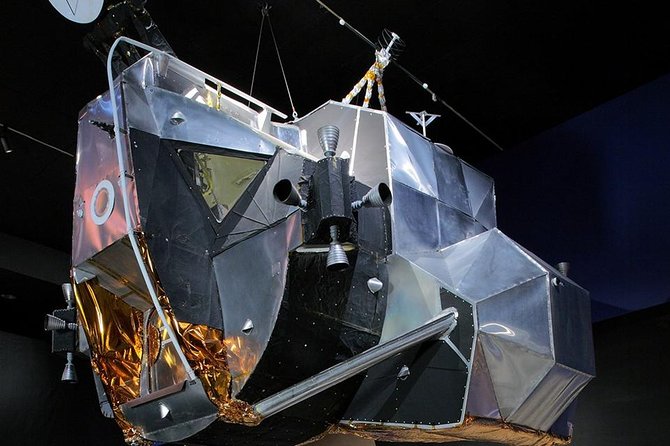
The museum includes interactive exhibits and family activities throughout the campus. These are useful because a visit built only around reading labels can wear children out quickly.
Flight simulators provide the most active option, but they cost extra and can be purchased on arrival. One simulator is described in visitor comments as a fighter-jet experience, and it is a popular choice for anyone who wants to add motion to the aircraft displays.
The 3D theater also requires an additional ticket. A flight-themed 3D movie can be added at the museum, but it is not included in the $29 admission price. If you are keeping to a strict budget, focus on the permanent displays and decide about the extras once you know how much time and energy you have left.
I like this flexible setup. You pay for the museum itself, then choose if a simulator or movie is worth the added cost. Families may appreciate the option to split up, with some people reading exhibits while others try an interactive activity.
The outdoor bridge adds an unexpected Seattle view
The T. Evans Wyckoff Memorial Bridge connects parts of the museum campus and offers more than a way to reach the next collection. On a clear day, you can look toward Seattle-Tacoma International Airport and Mount Rainier.
This viewpoint adds a useful sense of place. You can watch aircraft movement in the distance while standing among historic aircraft, linking the museum’s past with the active airport nearby. Mount Rainier is weather-dependent, of course, and Seattle’s clouds can easily hide it.
The bridge also means you will do some walking between buildings. Wear comfortable shoes and keep that in mind when planning a visit with young children or anyone who tires easily. Restrooms are available around the museum, which helps during a longer family visit.
How much time should you allow?
The official estimate is two to three hours, but I would use that as a minimum for a focused visit, not a guarantee that you will see everything.
Use these rough plans:
- Two hours: See the main galleries and a selection of large aircraft.
- Three hours: Cover the major buildings, Boeing displays, military aircraft, and space exhibits at a steady pace.
- Four to five hours: Read more labels, enter aircraft, take breaks, and add a simulator or movie.
- Most of a day: Best for aviation fans who want to study the aircraft, follow the Boeing story, and take in the military and space sections carefully.
The museum is a good choice in bad weather because much of the experience is indoors. Still, the site includes outdoor connections and a bridge, and the cancellation terms note that poor weather can affect the experience. If the provider cancels for weather, you are offered another date or a full refund.
Is the $29 admission good value?
For a small museum, $29 would feel steep. Here, the price makes more sense because your ticket covers a large campus, six buildings, more than 160 aircraft and spacecraft, historic Boeing facilities, interactive exhibits, and access to aircraft that you can see at close range.
The value improves the longer you stay. At two hours, you will get a worthwhile introduction. At four hours, the admission begins to look like a strong deal, especially if you are interested in aviation, space, engineering, military history, or Seattle’s industrial story.
Remember to budget separately for the simulators and 3D movie. The admission ticket does not include them. You can still have a full visit without paying for extras, so I would decide after arriving rather than adding every option automatically.
Who will enjoy this most?
You do not need to be an aviation expert. The size of the aircraft, the ability to enter selected planes, and the interactive displays give casual visitors plenty to enjoy.
This is particularly well suited to:
- Families looking for an educational indoor activity
- Aviation and space enthusiasts
- Adults interested in Boeing and Seattle history
- Visitors who enjoy military aircraft
- Anyone seeking a substantial museum visit rather than a quick attraction
- People with a rainy or flexible Seattle afternoon
Young children can engage with the hands-on sections, though the full campus may become tiring. Bring water and snacks for a family visit, and plan a break if you intend to stay several hours. The museum has a restaurant, and the gift center offers a broad selection of aviation-themed items.
The museum is also practical for mixed-interest groups. One person can study aircraft details while another focuses on space displays or interactive activities. You are not locked into a guide-led schedule.
Booking, opening hours, and cancellation details
The museum is open daily from 10:00 a.m. to 5:00 p.m. The ticket is offered in English, and confirmation is provided at booking. You present your voucher for admission at the museum.
The attraction is near public transportation, and service animals are allowed. Most people can take part, but the campus is large, so expect considerable walking between buildings.
Free cancellation is available up to 24 hours before the scheduled start time for a full refund. Cancellations or changes made within 24 hours are not accepted and are not refunded. Cutoff times use Seattle’s local time.
Should you book the Museum of Flight?
I would book it if you have at least three hours in Seattle and any interest in aircraft, space, engineering, military history, or hands-on museums. The chance to enter historic aircraft, see the first flight-worthy 747, study Concorde, and explore Boeing’s early home gives the visit real substance.
Book with more caution if you have only an hour, dislike large museums, or are mainly interested in the space shuttle trainer. Its deck may still be closed, and the simulators and 3D movie cost extra.
For most people, the $29 ticket is a fair buy. Arrive early enough to avoid rushing, allow more time than the basic estimate, and check the space trainer’s current access when you enter. If the weather is clear, save time for the bridge and its airport and Mount Rainier views.
FAQ
How much does admission to the Museum of Flight cost?
The entrance ticket costs $29 per person.
How long does a visit usually take?
The estimated visit lasts two to three hours, but you can easily spend four or five hours if you read the displays, enter aircraft, and try additional activities.
What are the museum’s opening hours?
The Museum of Flight is open Monday through Sunday from 10:00 a.m. to 5:00 p.m.
Are simulator tickets included?
No. Tickets for the simulators are not included in admission and may be purchased when you arrive.
Is the 3D movie included in admission?
No. The flight-themed 3D movie has an additional cost.
Can I see a Space Shuttle trainer?
The museum has a full-size Space Shuttle Orbiter training mockup. The trainer deck has been closed since the pandemic, so ask about current access when you arrive.
Can I see Mount Rainier from the museum?
On clear days, the T. Evans Wyckoff Memorial Bridge offers views of Mount Rainier and Seattle-Tacoma International Airport.
Is the museum suitable for children?
Yes. The museum has hands-on exhibits, interactive activities, and flight simulators. A visit can involve several hours of walking, so families should plan breaks and bring snacks or water.
What is the cancellation policy?
You can cancel at least 24 hours before the experience for a full refund. Cancellations or changes made less than 24 hours before the start time are not accepted or refunded. If poor weather causes the experience to be canceled, you will be offered another date or a full refund.
Just added around Seattle
- Native Culture – Suquamish and Chief Seattle★ 5.0 · 3 reviews
- Break It and Make It: A Glass Fusing Session in Everett★ 4.5 · 3 reviews
- Bainbridge Island Discovery and Wine Tour★ 5.0 · 3 reviews
- Seattle: Twilight Tour and Olympic National Park★ 5.0 · 3 reviews
- Beaches, Bites and Bavaria in Leavenworth: A Self-Guided Audio Tour★ 3.5 · 3 reviews
- Seattle: Lake Union Happy Hour Cruise★ 3.7 · 3 reviews
- Seattle: Lake Union Kayak Tour – Small Groups, Big Views★ 5.0 · 3 reviews
- Sail Bainbridge Island & Seattle Waters – Classic Sailboat★ 5.0 · 3 reviews