Reviewed · MUSEUMS
Seattle: Museum of Illusions Entry Ticket
Seattle’s Museum of Illusions turns a simple afternoon into a playful test of your eyesight, balance, and sense of scale. You can appear to defy gravity, look strangely tall or small, and step into a life-size kaleidoscope while learning why your brain gets fooled.
I like the hands-on design, since you are not just looking at objects behind glass. I also like the downtown location, close to Pike Place Market, the Seattle Art Museum, and the Seattle Aquarium. The main caution is value: at $41 per person, this makes the most sense if you enjoy taking part in optical tricks rather than simply viewing art.
In This Review
- Key points at a glance
- What the Museum of Illusions Seattle is really about
- Starting at 1330 5th Avenue
- The first illusion rooms
- Holograms and the science of perception
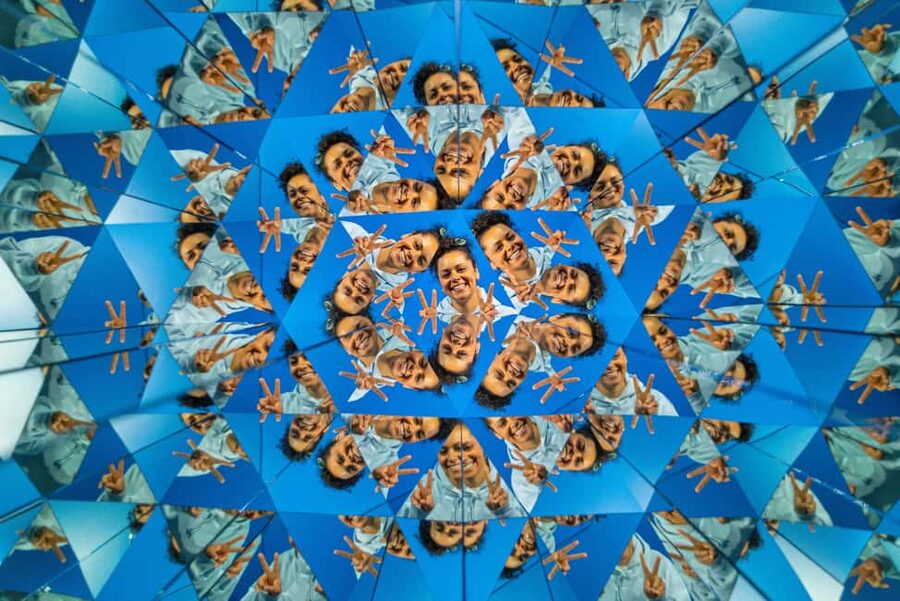
- Walking into the life-size kaleidoscope
- Why this works for families and friends
- Is $41 per person a fair price?
- Access, timing, and practical matters
- Who will enjoy this most?
- Should you book the Museum of Illusions Seattle?
- FAQ
- Where is the Museum of Illusions Seattle?
- How much does admission cost?
- How many exhibits are at the museum?
- What can I do inside the museum?
- Is the ticket valid for one day?
- Is the museum wheelchair accessible?
- Are animals allowed inside?
- Can I cancel my ticket for a refund?
Key points at a glance
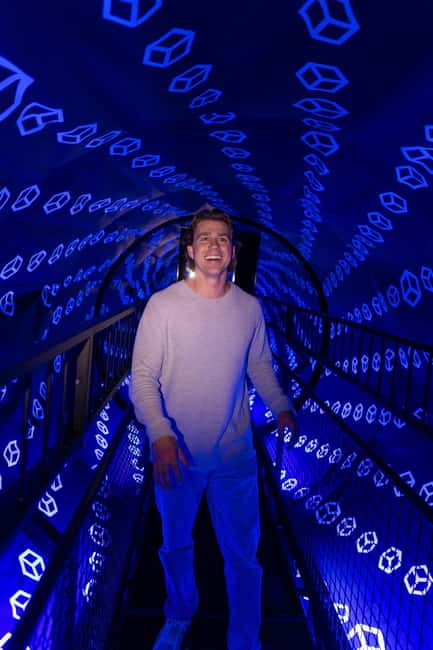
- More than 50 interactive exhibits: Expect illusion rooms, installations, holograms, and sensory puzzles.
- A life-size kaleidoscope: One of the more unusual setups gives you the chance to walk into a changing pattern of color and reflection.
- Gravity and body-size tricks: The rooms can make you look as though you are defying gravity, growing, or shrinking.
- Useful downtown base: The museum is at 1330 5th Ave, near Pike Place Market and several major Seattle sights.
- Good for shared fun: Families, friend groups, date nights, and group outings all fit the format well.
- Check your ticket before leaving: One recent customer reported paying but not receiving the ticket, so confirm your booking details in advance.
What the Museum of Illusions Seattle is really about
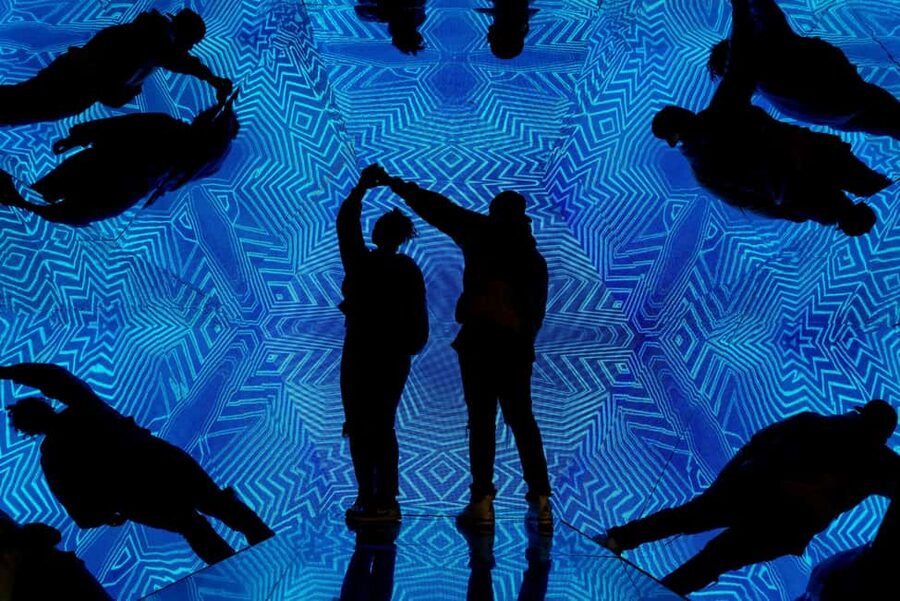
This is not a traditional museum where you quietly read labels and move from one display to the next. It is built around participation. You look, move, pose, compare what you see with what your friends see, and try to work out why your senses are being misled.
That distinction matters. The appeal comes from the combination of visual play and basic science. The exhibits show how easily your brain fills in gaps, judges size incorrectly, or accepts a false sense of balance. You are not simply told that perception can be unreliable. You experience it directly.
The museum offers more than 50 exhibits, including illusion rooms, holograms, and hands-on installations. The information provided does not give a fixed route or list every exhibit by name, so you should think of the visit as a collection of short experiments rather than a formal tour with a set order.
That flexible format works well for groups. One person can try an exhibit while another watches, takes a photo, or searches for the trick behind it. Then you can switch places. It is easy to talk through the displays instead of moving silently from room to room.
More Seattle attraction tickets:
- Seattle: Space Needle & Chihuly Garden and Glass Ticket
★ 4.7 · 1,890 reviews - Space Needle and Chihuly Garden and Glass Combination Ticket
★ 4.5 · 1,551 reviews - Seattle CityPASS®: Save up to 46% at 5 Top Attractions
★ 4.6 · 742 reviews
Starting at 1330 5th Avenue
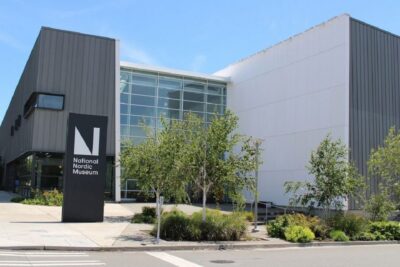
The museum is located at 1330 5th Ave, Seattle, WA 98101, with building access on the corner of 5th Avenue and Union. This puts the experience in the center of downtown, where it can fit neatly into a day of sightseeing.
You might visit before walking to Pike Place Market, after time at the Seattle Art Museum, or as an indoor stop near the Seattle Aquarium. The location is especially useful if your plans already center on downtown. You do not need to arrange a separate trip across the city just to reach it.
The activity is valid for one day, with starting times available according to the booking calendar. The supplied details do not state how many hours you should allow, so avoid building a tightly packed schedule around an exact visit length. Leave some flexibility before or after your entry.
Because the ticket is non-refundable, check the date and starting time before paying. Also make sure the ticket itself arrives. One recent customer reported that payment was taken but no ticket was received. That is not a reason to dismiss the experience, but it is a good reason to confirm your booking early and contact the provider if the entry document is missing.
The first illusion rooms

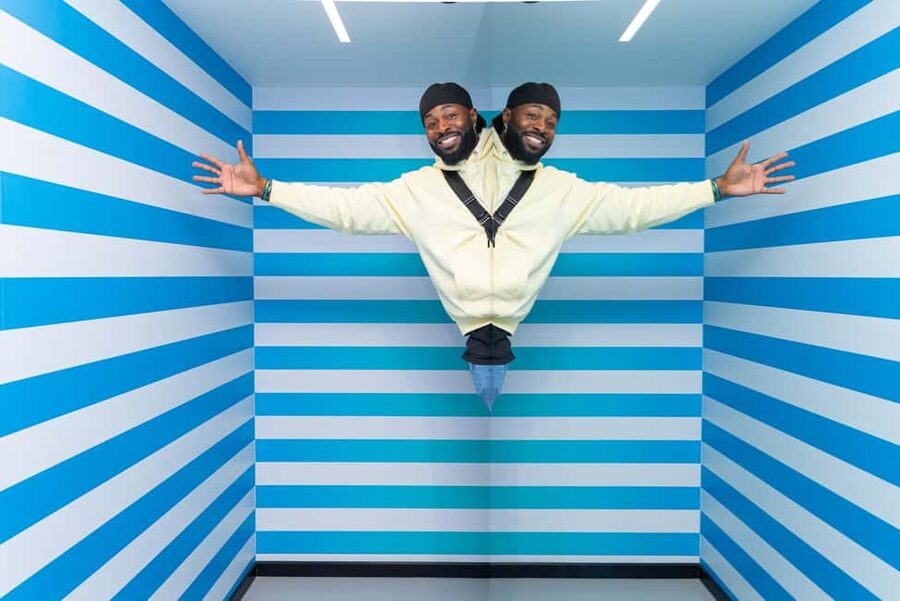
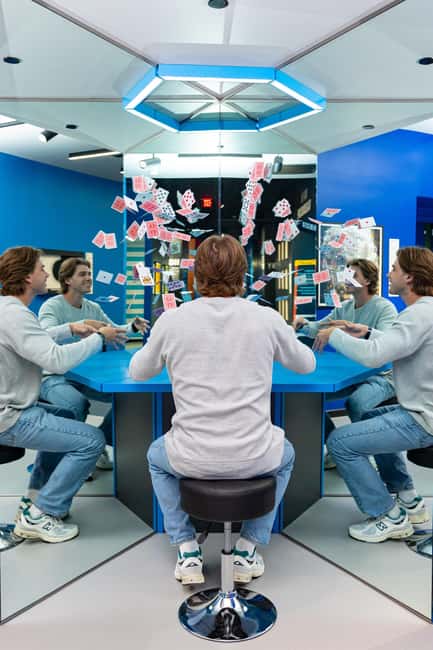
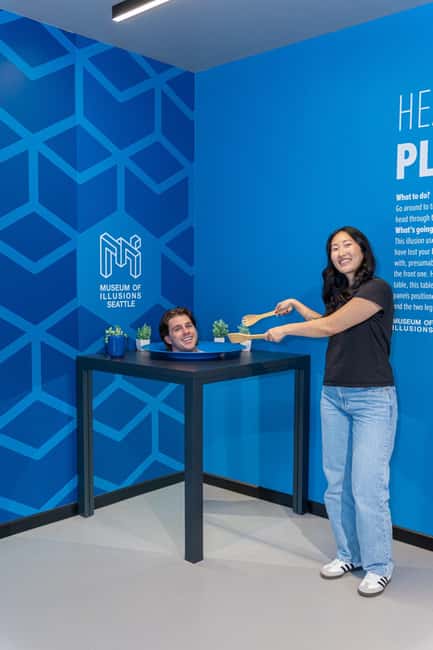
The illusion rooms are likely to be the most active part of the visit. Instead of standing in front of a single object, you enter a space designed to make ordinary physical rules look wrong.
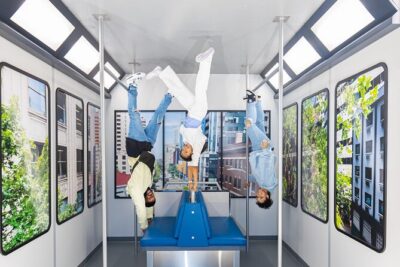
The supplied details specifically point to rooms where you can appear to defy gravity and change the apparent size of your body. These setups are best enjoyed with at least two people. Your companion can watch the effect from the right angle, help take a picture, and confirm that the trick looks as strange from the outside as it feels from within.
The value here is social. You are not paying only for information. You are paying for a series of shared moments that encourage you to laugh, compare results, and try the same effect more than once.
That said, some exhibits may appeal more to children and playful adults than to visitors seeking a serious art museum. The experience uses the language of science, but its main purpose is entertainment with an educational layer.
Holograms and the science of perception
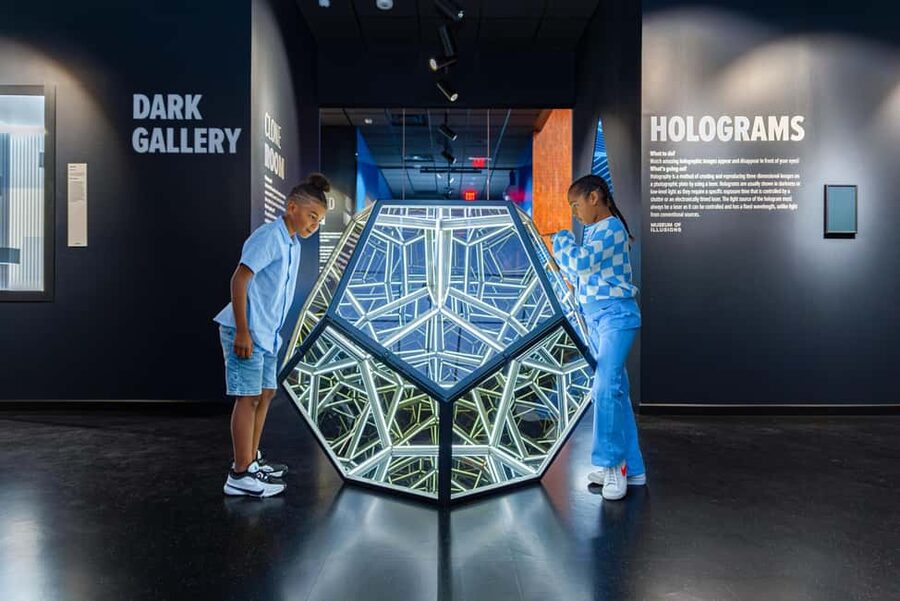
Holograms add a quieter change of pace. After the large illusion rooms, these displays give you a chance to focus on images that appear to have depth or presence beyond a flat surface.
The museum presents the science behind optical illusions, explaining how the brain interprets what the eyes receive. That makes the visit more than a series of photo opportunities. You can pay attention to the gap between what seems to be happening and what is actually happening.
I like this part because it gives parents and children something to discuss. Why does an image appear to move? Why does a room make your body look different? Why does your balance feel uncertain when the floor itself has not changed? The experience offers a practical introduction to perception without requiring a science background.
Do not expect a long lecture or a guided class based on the information available. The activity includes admission, not a named guide or a separately described tour. You should expect to explore the exhibits yourself and learn through the displays and your own reactions.
More museums in Seattle:
- The Museum of Flight Entrance Ticket
★ 5.0 · 477 reviews - Seattle: Seattle Art Museum Admission Ticket
★ 4.8 · 67 reviews - Seattle: The Museum of Flight Entry Ticket
★ 4.6 · 24 reviews - Museum of Illusions Seattle Admission Ticket
★ 4.0 · 9 reviews
Walking into the life-size kaleidoscope
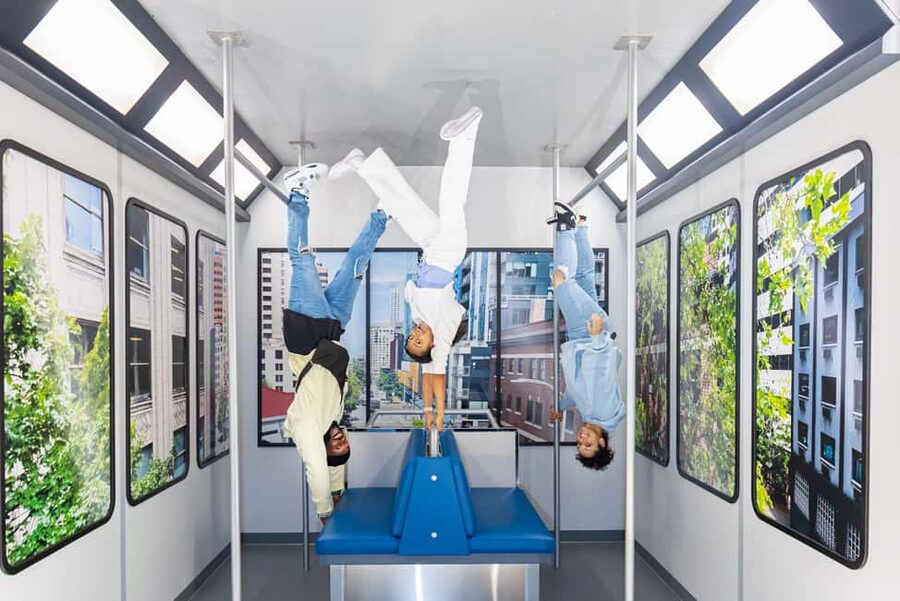
The life-size kaleidoscope is one of the clearest examples of how the museum turns a familiar object into a full-body experience. Instead of holding a small tube and looking through it, you can walk into a space built around changing patterns and reflections.
This gives the visit some variety. The body-size rooms depend on perspective and comparison, while the kaleidoscope is more about color, repetition, and changing visual patterns. It is a useful stop for anyone who enjoys photography, though the supplied information does not promise specific photography services or equipment.
You will get the most from it if you slow down rather than rush from exhibit to exhibit. Look at the pattern from different positions. Notice how your view changes as you move. The museum’s central lesson is simple: perception depends on where you stand and how your brain organizes what it sees.
Why this works for families and friends
The museum is designed for shared participation, not solitary observation. A family can take turns trying the rooms, and friends can compare how the same exhibit affects each person. A date night can also work well here because the displays give you easy conversation starters.
The format is particularly helpful when a group has mixed interests. One person may enjoy the science, another may prefer the photographs, and another may simply want a playful indoor activity. Since there are more than 50 exhibits, you have many short stops rather than one long presentation that everyone must follow at the same pace.
The downside is that the experience may feel less satisfying if you prefer quiet galleries, detailed historical objects, or a long narrative. The supplied information does not describe a collection of traditional artworks or Seattle history displays. Go for the sensory puzzles and visual effects, not for a conventional museum visit.
A recent verified booking described the experience as great and fun, which fits the museum’s purpose. At the same time, the overall rating provided is 4.3 from six reviews, not a perfect score. The small number of ratings means you should treat that figure as a rough guide rather than a final verdict.
Is $41 per person a fair price?
At $41 per person, this is not a low-cost stop. The question is how you measure value.
If you are visiting with family or friends and expect to spend time trying many exhibits, taking photos, and repeating the best effects, the price can make sense. The 50-plus displays give you more than one quick optical trick, and the downtown position may save time compared with an attraction that requires a long journey.
If you are on a strict budget, the price deserves more thought. Admission covers entry only. It does not include transportation, food, a guide, or another attraction. The activity is valid for one day, but no exact visit duration is stated, so you cannot calculate the cost by a guaranteed number of hours.
I would compare it with your other downtown plans. If you already intend to visit Pike Place Market, the Seattle Art Museum, or the Seattle Aquarium, the museum can serve as a playful add-on in the same area. If you would make a special trip only for a short visit, the price may feel high unless optical illusions are a main interest.
Access, timing, and practical matters
The museum is wheelchair accessible, which makes the activity possible for visitors who need step-free access. The information does not give detailed measurements for individual rooms or explain whether every exhibit can be used from a wheelchair, so contact the provider ahead of time if you need exhibit-by-exhibit guidance.
Animals are not allowed inside the museum. Plan accordingly, since the provided information does not list an exception for pets or other animals.
Starting times are available through the booking calendar, and the ticket is valid for one day. Since the activity is non-refundable, check your date carefully. I would also save the confirmation and verify that the entry ticket has been delivered before setting out.
No guide names or language options are provided. You should therefore plan for a self-guided visit, using the exhibit explanations and your own observations. If you need information in a particular language, ask before booking rather than assuming it will be available.
Who will enjoy this most?
I would recommend the museum most strongly to:
- Families looking for an indoor activity with active participation
- Friends who enjoy unusual photos and playful challenges
- Couples planning a casual date in downtown Seattle
- Groups that want an attraction everyone can try together
- Visitors who are curious about sight, balance, and how the brain reads visual information
You may want to skip it if you are looking for Seattle history, a quiet art collection, or a long guided tour. It is also less appealing if your group dislikes posing, repeating an exhibit, or taking part in visual tricks.
The museum’s best quality is its ability to turn perception into something you can test with your own body. That gives the visit more character than a simple display of optical images.
Should you book the Museum of Illusions Seattle?
Book it if you want a playful downtown stop with more than 50 hands-on exhibits, especially if you are visiting with children, friends, or someone who enjoys taking photos. The nearby Pike Place Market, Seattle Art Museum, and Seattle Aquarium make it easy to add to a wider day of sightseeing.
Think twice if $41 feels steep for an attraction without a stated visit length, or if you prefer traditional museums. Before you go, confirm your starting time and make sure the ticket has arrived. With those checks in place, this is a lively, accessible way to spend part of a Seattle day and see how easily your eyes can fool your brain.
FAQ
Where is the Museum of Illusions Seattle?
It is located at 1330 5th Ave, Seattle, WA 98101. Access to the building is on the corner of 5th Avenue and Union.
How much does admission cost?
The listed price is $41 per person.
How many exhibits are at the museum?
The museum offers more than 50 interactive exhibits, including illusion rooms, installations, and holograms.
What can I do inside the museum?
You can explore exhibits that make you appear to defy gravity, change body size, walk into a life-size kaleidoscope, and test how your senses interpret visual effects.
Is the ticket valid for one day?
Yes. The activity is valid for one day, and you can check availability for starting times.
Is the museum wheelchair accessible?
Yes. The museum is wheelchair accessible.
Are animals allowed inside?
No. Animals are not allowed in the museum.
Can I cancel my ticket for a refund?
No. This activity is non-refundable.
Just added around Seattle
- Native Culture – Suquamish and Chief Seattle★ 5.0 · 3 reviews
- Break It and Make It: A Glass Fusing Session in Everett★ 4.5 · 3 reviews
- Bainbridge Island Discovery and Wine Tour★ 5.0 · 3 reviews
- Seattle: Twilight Tour and Olympic National Park★ 5.0 · 3 reviews
- Beaches, Bites and Bavaria in Leavenworth: A Self-Guided Audio Tour★ 3.5 · 3 reviews
- Seattle: Lake Union Kayak Tour – Small Groups, Big Views★ 5.0 · 3 reviews
- Seattle: Lake Union Happy Hour Cruise★ 3.7 · 3 reviews
- Sail Bainbridge Island & Seattle Waters – Classic Sailboat★ 5.0 · 3 reviews