
Reviewed · ATTRACTION TICKETS
Pacific Science Center General Exhibit Admission
Seattle’s Pacific Science Center puts butterflies, tide-pool animals, robotic dinosaurs, and hands-on science under one roof. The Tropical Butterfly House is the star for many families, while Tinker Tank gives children a place to build, test, and try again.
I like the mix of quiet observation and active play. You can study free-flying butterflies one minute, feel sea life in a tide pool the next, then watch a live experiment or tackle a design challenge. The main drawback is age and upkeep: much of the center feels best suited to children under 12, and some exhibits may seem dated for the admission price.
In This Review
- Key Points
- What Your $33.75 Ticket Covers
- Start With the Tropical Butterfly House
- Meet Puget Sound at the Salt Water Tide Pool
- Build and Test Ideas in Tinker Tank
- Roar With Robotic Dinosaurs
- Catch Live Science in Action
- Planetarium, Laser Shows, and IMAX Cost Extra
- How Long to Stay and How to Plan the Day
- Who Will Get the Most From Pacific Science Center
- Practical Details Before You Go
- Is the $33.75 Admission Worth It?
- FAQ
- How much does Pacific Science Center General Exhibit Admission cost?
- What does general admission include?
- Are IMAX tickets included?
- Are planetarium and laser-show tickets included?
- How long should I plan to spend there?
- When is the Pacific Science Center open?
- Can I cancel for a full refund?
Key Points
- The Tropical Butterfly House offers a warm garden setting with hundreds of free-flying butterflies.
- Salt Water Tide Pool lets you feel and study animals from Puget Sound while learning about their habitats.
- Tinker Tank turns engineering into hands-on play through building and design challenges.
- Robotic dinosaurs give younger children a memorable prehistoric stop, though older children may want more depth.
- General admission is not all-inclusive, so IMAX, planetarium, and daytime laser shows cost extra.
- Plan for two to three hours, or longer if you add a film or return to favorite exhibits.
What Your $33.75 Ticket Covers
The Pacific Science Center General Exhibit Admission ticket costs $33.75 per person and arrives as a mobile ticket. It covers the center’s general exhibits and local taxes, but not the IMAX theater, planetarium, daytime laser show, food, or drinks.
That distinction matters. The headline price gets you through the doors and into the permanent exhibition areas, but some of the center’s most recognizable add-ons require another purchase. If you want a film or a planetarium presentation, check the schedule and total cost before you commit to the visit.
I see the best value here for a family that will actively use several sections. A child who enjoys touching, testing, building, and asking questions can spend a solid afternoon moving from one activity to another. For one adult visiting alone, or for an older child expecting a highly polished science museum, the price may feel harder to justify.
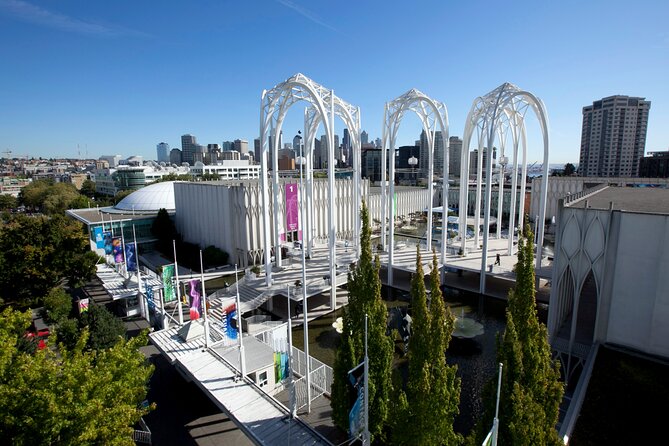
The center is close to the Space Needle and near public transportation, so it fits easily into a Seattle sightseeing day. A mobile ticket also saves you from handling a paper voucher. Prebooking helps guarantee entry, though you should still check the center’s current schedule before setting out.
More Seattle attraction tickets:
- Seattle: Space Needle & Chihuly Garden and Glass Ticket
★ 4.7 · 1,890 reviews - Space Needle and Chihuly Garden and Glass Combination Ticket
★ 4.5 · 1,551 reviews - Seattle CityPASS®: Save up to 46% at 5 Top Attractions
★ 4.6 · 742 reviews
Start With the Tropical Butterfly House
The Tropical Butterfly House is one of the most distinctive parts of the visit. You walk into a lush garden setting where hundreds of butterflies fly freely around you. This is not a display of insects behind glass. The appeal comes from watching them move through an open environment and seeing their colors and patterns at close range.
For younger children, this can be the moment that makes the science center feel special. It is calm, visual, and easy to understand without a long attention span. Older children and adults can slow down and notice how the butterflies use the garden space, but the experience is more about direct observation than a formal lesson.
Give this section time instead of rushing through it. Children often need a few minutes to adjust to the warm setting and spot the butterflies. Since the exhibit is a major draw, visiting early in your stay can be smart, especially if you want to see it before your group becomes tired.
The butterfly house also adds variety to the day. After noisy interactive exhibits and robotic dinosaurs, this section offers a softer change of pace. I like that contrast. A science center works best when it does not treat every subject as a button to press or a machine to operate.
Meet Puget Sound at the Salt Water Tide Pool
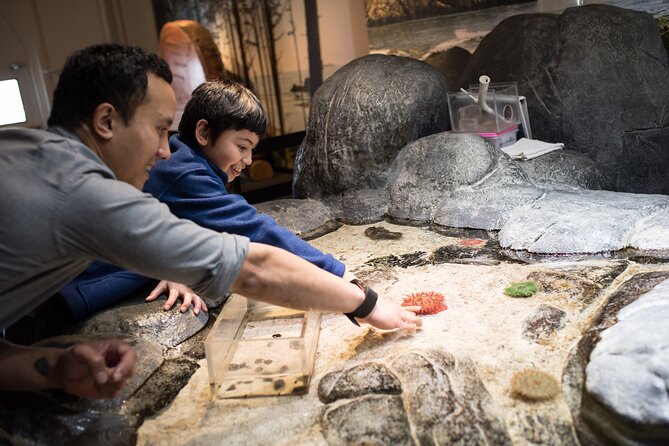
The Salt Water Tide Pool connects the indoor exhibits to Seattle’s surrounding waters. Here, you can interact with animals from Puget Sound, feel their distinct textures, and learn how they share an ecosystem.
This is a useful stop because it gives local meaning to marine science. You are not only looking at a distant ocean habitat. You are learning about the waters associated with the city itself and the living creatures found there. That regional link makes the exhibit more memorable than a general display about sea life.
The hands-on element is especially helpful for children who learn through touch. It also gives adults a chance to explain why habitats matter and how different animals can live together in one system. The exhibit is simple in concept, but it creates a direct connection between a child’s hand and a larger environmental idea.
Use the tide pool as a chance to slow down and ask questions. The strongest parts of the Pacific Science Center are often the ones that let you do something first and think about the science second.
Build and Test Ideas in Tinker Tank
Tinker Tank is the center’s makerspace, with engineering and design challenges that encourage you to build, adjust, and try again. The value here is not just the finished object. It is the process of finding out why an idea works or fails.
That makes Tinker Tank a good match for children who like making things with their hands. It can also hold the attention of adults who enjoy practical problem-solving. You do not need a long science lecture to understand the basic lesson: test an idea, notice the result, and change the design.
I particularly like this kind of exhibit because it gives children permission to be wrong. A failed attempt is part of the activity, not a sign that the child has missed the point. If your family tends to rush from one display to the next, this is a section worth treating as a real activity rather than a quick stop.
The challenge is that the center’s appeal depends on how many stations are working and how crowded the area feels at the time of your visit. The supplied information does not promise a particular challenge or activity, so keep your expectations flexible.
Something different, still within Seattle:
- Beneath The Streets Underground History Tour
★ 4.5 · 8,006 reviews - Chef Guided Food Tour of Pike Place Market
★ 5.0 · 3,733 reviews - Mt. Rainier National Park Highlights Tour
★ 5.0 · 3,156 reviews - Seattle: Guided Underground Walking Tour
★ 4.6 · 2,144 reviews
Roar With Robotic Dinosaurs
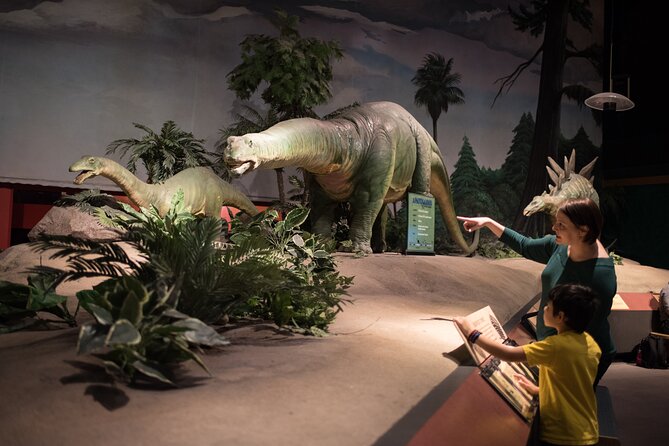
The prehistoric area features roaring robotic dinosaurs in a setting designed to suggest their habitats and behaviors. For a four-year-old who loves dinosaurs, this may be an easy favorite. The movement and sound give the display more energy than a row of static fossils.
This is also the section where age matters most. Younger children can enjoy the scale, noise, and familiar creatures without needing much background. Older children may find the material basic, especially if they have already visited several science or natural-history museums.
I would treat the dinosaur area as one part of the visit, not the main reason to pay for admission. It works well as a visual break between hands-on activities and can help younger children stay interested. If your child is expecting an extensive fossil collection or a detailed prehistoric exhibit, the experience may feel smaller than expected.
The robotic animals also show the center’s overall approach. Pacific Science Center favors direct interaction and family learning over a quiet, formal museum experience. That is a strength for some children and a limitation for others.
Catch Live Science in Action

Live science experiments add a sense of occasion to the day. Instead of reading a label or pushing a button, you get to watch science happen in front of you. The exact program can vary, so check what is scheduled during your visit.
These demonstrations are useful when your group needs a shared activity. A child can enjoy the surprise and movement, while an adult can help connect the experiment to a larger idea. They also break up the self-guided nature of the permanent exhibits.
The center contains hundreds of interactive exhibits, but that does not mean every area will hold your attention equally. Some displays are aimed at toddlers or young elementary-age children. Others may appeal to a wider range of ages. I would let your group choose its strongest interests rather than trying to see every exhibit in order.
A previous visit can also shape your expectations. Some exhibits may feel familiar or old if you remember the center from childhood, and some sections may not feel as updated as newer science museums. The educational purpose remains clear, but the presentation is not uniformly modern.
Planetarium, Laser Shows, and IMAX Cost Extra
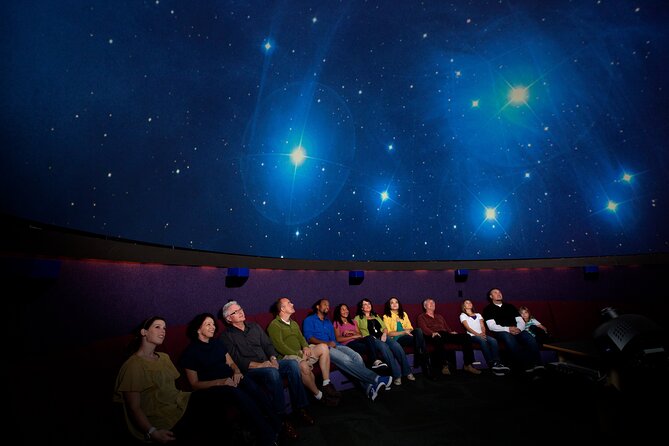
General admission does not include the IMAX documentary, planetarium tickets, or daytime laser shows. You can buy these separately during your visit, with availability varying by date and schedule. IMAX tickets are available at the ticket booth for an additional fee.
This setup can work well if you want to build your own day. You can see the exhibits first, then decide if a film or show suits your energy and budget. It can also be frustrating if you assume the $33.75 ticket includes every major attraction inside the complex.
The IMAX theater has a strong reputation for the movie experience itself, but that is a separate purchase and should not be used to judge the general exhibit ticket alone. The same applies to the planetarium and laser show. They may add variety, but they change the final cost.
If you are sensitive to bright lights, take care with the laser show. The show has been a favorite part of some visits, but the supplied feedback also includes a warning that the lights may hurt sensitive eyes. That is a practical point to consider before buying an extra ticket.
How Long to Stay and How to Plan the Day
The expected visit lasts two to three hours, which is a sensible starting plan for the general exhibits. A family with young children may move quickly through some areas and spend longer at the toddler section, dinosaurs, butterflies, or Tinker Tank. A group with strong interest in science can easily need more time.
Some families may spend most of a day here, especially if they add lunch, a film, the planetarium, or the laser show. Food and drinks are not included, so plan for that extra expense. The available information does not give a specific meal arrangement, so do not build a tight schedule around a particular food option.
The center is open from 10 a.m. to 5 p.m., with last admission at 4 p.m., Wednesday through Sunday during the stated operating period. It may open Monday through Sunday during school holidays and breaks, and hours can change. Check the official website for closures and current opening days before you go.
A morning arrival gives you more flexibility. You can see the main exhibits, pause for food, and then decide if you want an extra show. Arriving late leaves less room for trial-and-error activities, and that is exactly the kind of time Tinker Tank needs.
There may not be clear maps throughout the building, so take a moment to get oriented when you enter. If your group splits up, agree on a meeting point. This is a small planning step, but it can prevent a lot of wandering and backtracking.
Who Will Get the Most From Pacific Science Center
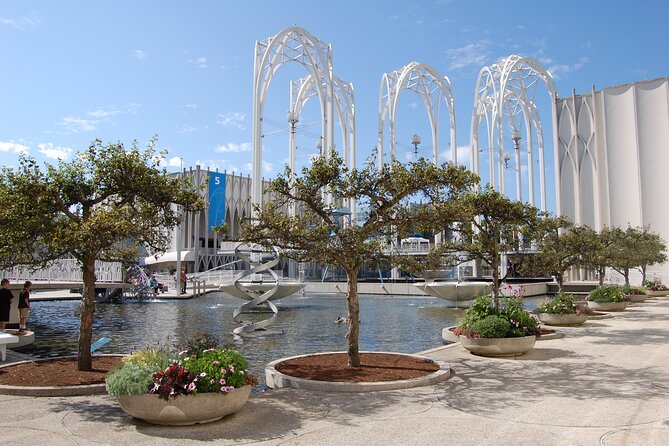
The strongest match is a family with children from preschool age through about 11. Younger children can enjoy the butterflies, dinosaurs, tide pool, and toddler-focused areas. Children who are beginning to ask how things work may get the most from Tinker Tank and the live experiments.
The center can also work for adults who enjoy hands-on learning. Advanced education does not automatically make the exhibits too simple, since the format invites experimentation and observation. Still, adults visiting alone should set realistic expectations. The experience is built mainly around family participation, and much of the material is basic.
A 12-year-old may fall into an in-between age group. Some children that age will still enjoy the engineering challenges and interactive displays. Others may want more detailed science content, newer technology, or a larger collection of advanced exhibits.
The same goes for children who have visited several science centers. If this is your child’s first museum of this kind, the range of activities can feel exciting and full. If your family has seen larger or recently renovated institutions, some sections may seem dated or limited.
Practical Details Before You Go
Your confirmation arrives at booking, and the mobile ticket is accepted for entry. Youth age 12 and under must remain with a responsible adult or legal guardian for the full visit. Service animals are allowed, and the center is near public transportation.
Parking is available in a nearby structure, but it can be pricey and tight. Public transportation may be the less stressful choice, especially if you are already sightseeing around the Space Needle area. The supplied information does not give parking rates, so check current prices rather than assuming parking is included.
The experience requires good weather under its stated cancellation terms, even though the main attraction is indoors. If poor weather causes cancellation, you can be offered another date or a full refund. For a full refund, cancel at least 24 hours before the local start time. Cancellations or changes inside 24 hours are not refunded or accepted.
That policy is worth noting if your Seattle plans are still shifting. Book ahead for guaranteed entry, but keep the 24-hour deadline in mind.
Is the $33.75 Admission Worth It?
I would book this for a family with young children who can use several exhibits, especially the butterfly house, tide pool, Tinker Tank, and dinosaur area. Those sections offer enough variety to make two or three hours feel worthwhile, and the center is easy to pair with other attractions near the Space Needle.
I would hesitate if you are an adult traveling alone, an older child looking for advanced science, or someone who has recently visited a newer, larger science museum. In that case, the general exhibits may feel basic, and the extra cost of IMAX, planetarium, or laser-show tickets can push the total higher than expected.
The smart approach is to buy the ticket for the interactive exhibits, not for the add-ons. If butterflies, local marine life, building challenges, and hands-on family play sound like your kind of afternoon, Pacific Science Center earns a place in your Seattle plan. If you mainly want an IMAX film or planetarium presentation, compare the separate ticket cost and schedule before committing to general admission.
FAQ
How much does Pacific Science Center General Exhibit Admission cost?
The listed price is $33.75 per person. Local taxes are included.
What does general admission include?
It includes access to the general exhibits, including the Tropical Butterfly House, Salt Water Tide Pool, Tinker Tank, prehistoric dinosaur area, and live science activities.
Are IMAX tickets included?
No. IMAX tickets cost extra and may be purchased at the ticket booth.
Are planetarium and laser-show tickets included?
No. Daytime laser shows and planetarium presentations require separate tickets, and availability varies during your visit.
How long should I plan to spend there?
Plan on about two to three hours for general admission. You may need longer if you add a film or show, or if your children spend extra time at the hands-on exhibits.
When is the Pacific Science Center open?
During the stated operating period, it is open Wednesday through Sunday from 10 a.m. to 5 p.m., with last admission at 4 p.m. It may open daily during school holidays and breaks. Hours can change, so check the official website before visiting.
Can I cancel for a full refund?
Yes. Cancel at least 24 hours before the experience’s local start time for a full refund. Cancellations or changes made less than 24 hours ahead are not refunded. If poor weather causes a cancellation, you can be offered another date or a full refund.
Just added around Seattle
- Native Culture – Suquamish and Chief Seattle★ 5.0 · 3 reviews
- Break It and Make It: A Glass Fusing Session in Everett★ 4.5 · 3 reviews
- Bainbridge Island Discovery and Wine Tour★ 5.0 · 3 reviews
- Seattle: Twilight Tour and Olympic National Park★ 5.0 · 3 reviews
- Beaches, Bites and Bavaria in Leavenworth: A Self-Guided Audio Tour★ 3.5 · 3 reviews
- Seattle: Lake Union Happy Hour Cruise★ 3.7 · 3 reviews
- Seattle: Lake Union Kayak Tour – Small Groups, Big Views★ 5.0 · 3 reviews
- Sail Bainbridge Island & Seattle Waters – Classic Sailboat★ 5.0 · 3 reviews
Attraction Tickets, compared.

Space Needle & Chihuly Garden and Glass Ticket
Read our review →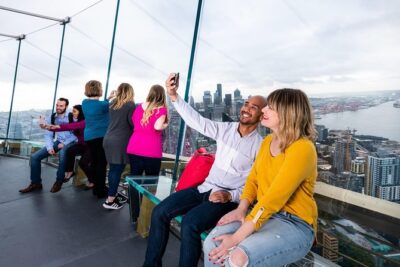
Space Needle and Chihuly Garden and Glass Combination Ticket
Read our review →
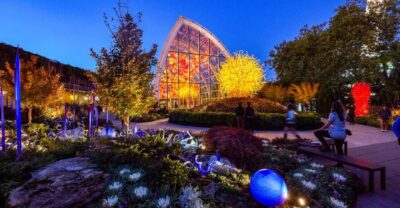
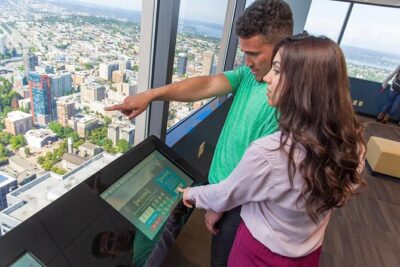
Sky View Observatory at the Columbia Center Admission Tickets
Read our review →
Skip the Line: Daily Admission at Woodland Park Zoo Ticket
Read our review →

Browse the lists this tour appears in