
Reviewed · HISTORICAL TOURS
Six Women – A Historical Walking Tour
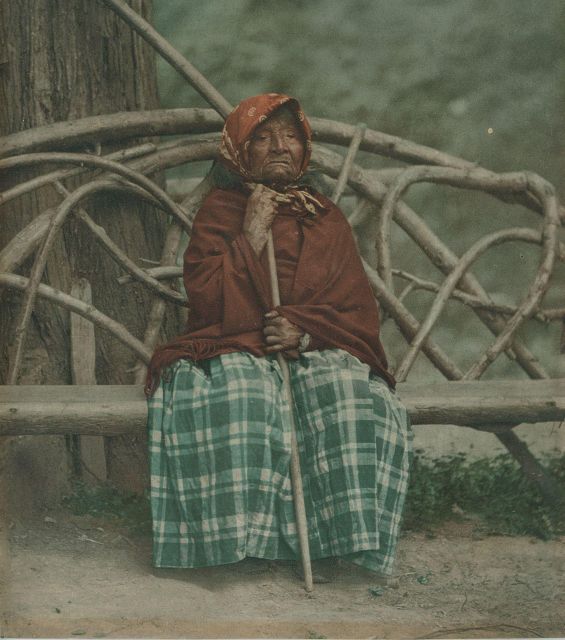
Seattle’s Pioneer Square looks different when you follow the lives of six women who once worked, fought, schemed, governed, or simply tried to survive within five blocks of one another. This tour skips the usual list of famous buildings and uses six sharply different lives to show how Seattle changed over two centuries.
I like two things right away: the tight walking route, which lets you spend more time listening than marching, and the focus on women often left out of standard city history. Carter Lee Churchfield also brings pictures, facts, and a lively delivery shaped by more than 1,000 tours in Seattle and Honolulu.
The main consideration is the subject matter. Addiction, prostitution, suicide, foul language, and other adult themes are part of the program, so this is not a family sightseeing walk or a gentle introduction to Seattle history.
In This Review
- Six women, six stops, one small corner of Seattle
- Why this Pioneer Square walk feels different
- Meeting Carter at Cherry Street Coffee House
- Stop one: a Native Princess and the city before the city
- Stop two: a Gay Icon and a less visible Seattle
- Stop three: the Swindler and the machinery of ambition
- Stop four: the Zealot and the power of belief
- Stop five: a Madame and the hard economics of survival
- Stop six: a Mayor and women in public power
- What the route tells you about Pioneer Square
- Carter’s storytelling style and the small-group advantage
- Is $35 a fair price?
- Who should book this tour?
- FAQ
- Where does the Six Women historical walking tour meet?
- How long does the tour last?
- How much does the tour cost?
- How many people can join the tour?
- What language is the tour offered in?
- Is the walking tour wheelchair accessible?
- Is the tour suitable for children?
- What subjects are covered on the tour?
- Does the tour include adult themes?
- Should you book Six Women?
Six women, six stops, one small corner of Seattle
- A Native Princess: Learn how Indigenous identity and Seattle’s early development meet in one woman’s story.
- A Gay Icon: See the city through the life of a woman connected to a history often pushed aside.
- A Swindler: Explore ambition, deception, and the social world that made a bold scheme possible.
- A Zealot: Consider how belief can shape a life, and how it can harm as well as inspire.
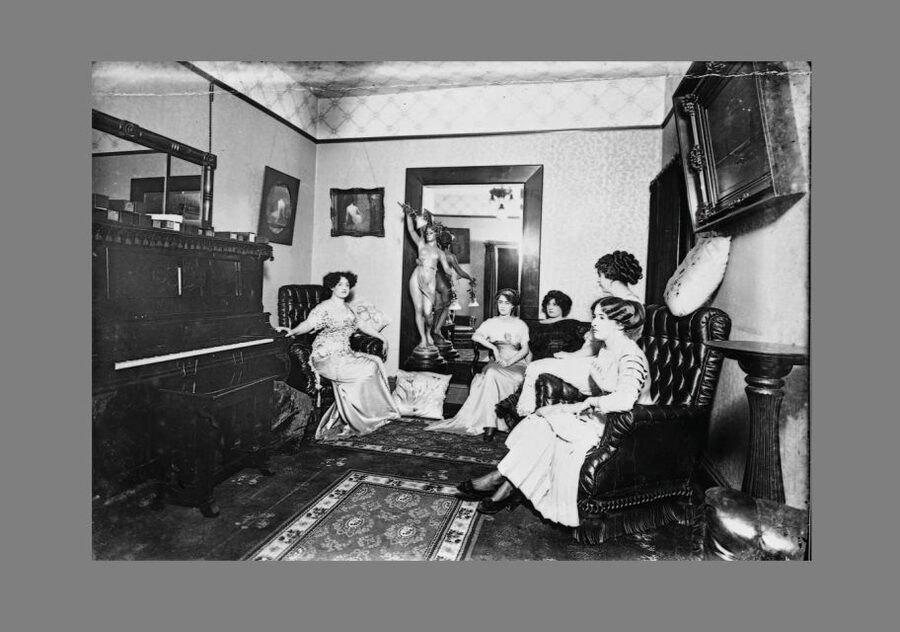
- A Madame: Hear the difficult story of prostitution, power, money, and survival.
- A Mayor: Look at civic life through a woman who reached public office in a changing city.
Why this Pioneer Square walk feels different
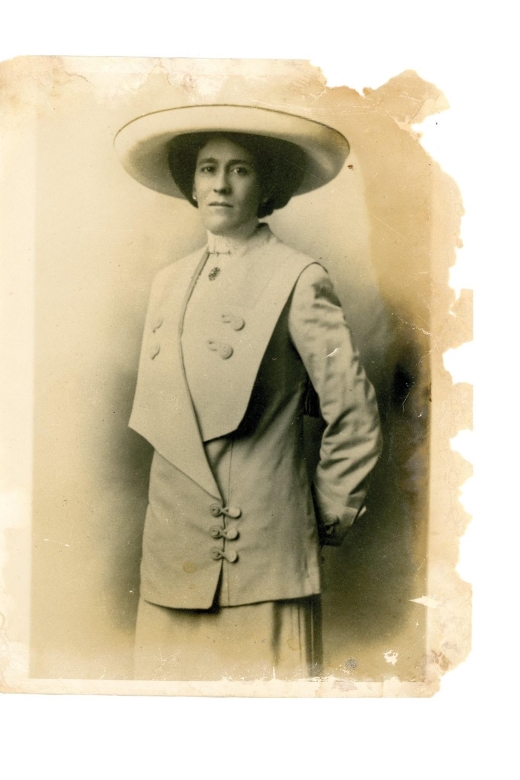
Most Seattle history tours lean toward the city’s famous names, grand projects, and well-worn stories. This one takes a narrower path. Carter Lee Churchfield links six women whose lives unfolded close together, then uses those connections to reveal a more complicated city.
That approach matters because Pioneer Square can be easy to read as a collection of old façades and brick streets. The women’s stories give the district human scale. You are not just looking at where Seattle once did business. You are considering who had power there, who made money, who was judged harshly, and who received little credit.
The six categories in the tour title are deliberately striking. A princess and a mayor suggest public importance. A swindler and a zealot suggest conflict. A Madame points to the city’s rougher commercial life. The Gay Icon adds a social history that a standard civic tour might barely mention.
You should not expect six tidy portraits of heroines. Some women were admirable, some were destructive, and some were caught between personal choices and forces beyond their control. That balance is one of the tour’s strengths. It avoids turning the past into a parade of saints.
More walking tours in Seattle:
- Seattle: Guided Underground Walking Tour
★ 4.6 · 2,144 reviews - Taste Pike Place Walking Food Tour
★ 5.0 · 930 reviews - Seattle Delicious Donut Adventure & Walking Food Tour
★ 5.0 · 772 reviews
Meeting Carter at Cherry Street Coffee House
The tour begins in front of Cherry Street Coffee House. That is a useful meeting point in Pioneer Square, especially if you want to arrive early with a drink or a quick snack, though the tour information does not promise time inside the café.
Carter Lee Churchfield is the guide and creator of this tour. She has been giving tours in Seattle and Honolulu since 2012 and has led more than 1,000 tours. That background shows in the format: the route is compact, the stories are designed for live delivery, and the guide can handle questions beyond the basic script.
You can expect an English-language tour with a small group limited to 10 people. That number is important. A story-heavy walk works better when you can hear the guide, see the images she brings, and ask a question without trying to compete with a large crowd.
The exact length needs a little planning. The activity is listed as 1.5 hours, while the description also calls it a two-hour walking tour. One account records a finish closer to 1 hour and 45 minutes. I would reserve about two hours rather than schedule a tight appointment immediately afterward.
Stop one: a Native Princess and the city before the city
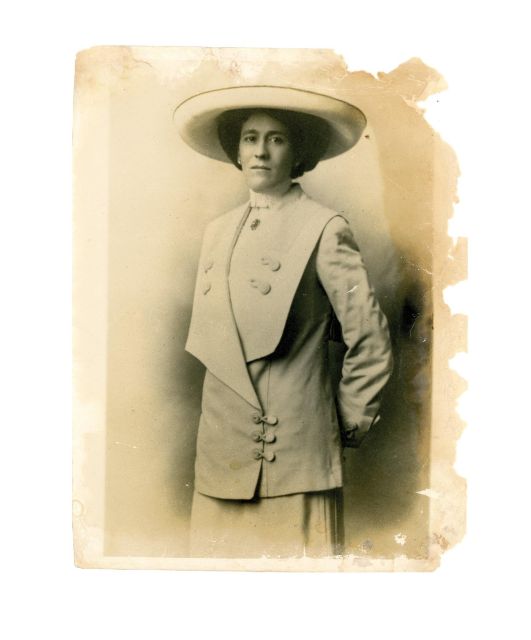
The first story introduces a Native Princess and gives the tour a wider frame than a standard Pioneer Square walk. Seattle’s past did not begin with streets, businesses, or the city government. Indigenous people and cultures were here first, and this figure brings that earlier world into the story.
The value of this stop is not only the individual biography. It creates a reminder that the district’s familiar civic story is partial. A title such as Native Princess also raises questions about how Indigenous women were described by outsiders, how cultures were translated for the public, and how personal identity can become part of a city’s mythology.
Because the supplied details do not name the six women, you should not expect a preview of every biographical fact before booking. That is part of the appeal for some people, but it may frustrate anyone who wants to research each subject in advance.
Stop two: a Gay Icon and a less visible Seattle
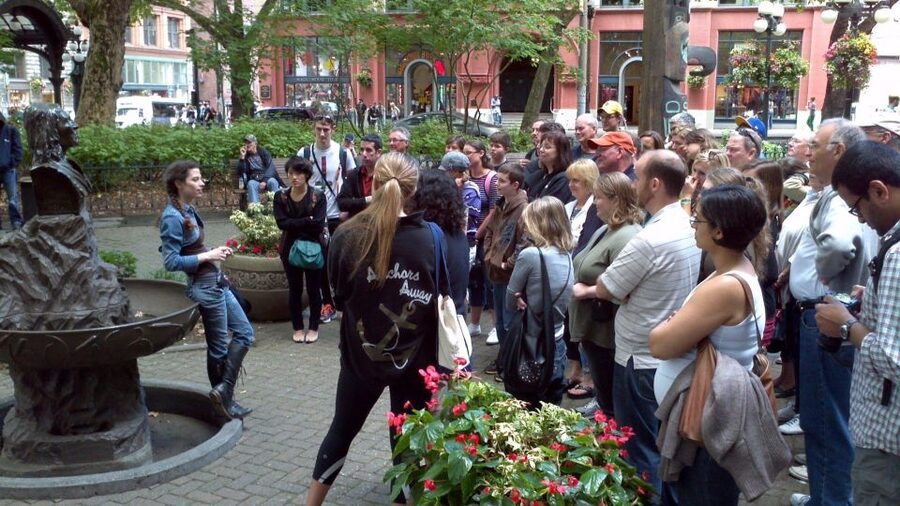
The Gay Icon broadens the tour again. Seattle’s history includes public life, private identity, social pressure, and changing ideas about who gets to belong openly. This stop gives the walk a chance to connect one woman’s story with a part of the city’s past that is often missing from general sightseeing.
Carter’s use of pictures and storytelling is especially useful here. A person can be hard to place in an old district if you only hear dates and names. Images help you connect the individual to the street, the era, and the way Seattle looked a century ago.
This is also where the adult tone of the tour may matter. The program is not presented as a polished heritage story. It deals with lives that could include stigma, scandal, and difficult personal choices. If you prefer a strictly architectural walk, this stop may feel more personal and socially focused than expected.
More history tours in Seattle:
- Beneath The Streets Underground History Tour
★ 4.5 · 8,006 reviews - Historical Walking Tour in Leavenworth
★ 5.0 · 44 reviews - Leavenworth Sip & Stroll A Historical Wine Tour
★ 5.0 · 44 reviews - Henry Art Tours-Come See the Fun Side of Seattle Art/Pubs/History
★ 5.0 · 27 reviews
Stop three: the Swindler and the machinery of ambition
The Swindler offers a different kind of history. Instead of asking only who built Seattle or who served the public, this story examines how people maneuvered through the city’s social and financial systems.
A swindle is never just about one dishonest act. It can reveal what people wanted, what they trusted, and which doors were open to someone willing to bend the rules. In a young and changing city, reputation could be valuable, portable, and surprisingly easy to reshape.
This stop should appeal to you if you like history with moral friction. You are not asked to admire every subject. You get to consider how opportunity, charm, money, and deception worked together. Carter’s ability to answer questions beyond the prepared talk adds value here, since stories of fraud often raise as many questions as they answer.
Stop four: the Zealot and the power of belief
The Zealot changes the mood. This story focuses on conviction, and likely on the point where firm belief becomes extreme. The label is not neutral, which makes the stop a good test of the tour’s balanced approach.
You can use this part of the walk to think about how women were treated when they acted outside expected social roles. A forceful woman might be praised as a leader, dismissed as a fanatic, or remembered only through the most sensational parts of her life. The tour’s structure allows those tensions to sit next to one another.
Do not expect the six subjects to fit one political or moral pattern. The stated aim is to show women who were masters of their destinies as well as victims of fate. That makes the Zealot useful as a counterpoint to the Native Princess, the Swindler, and the later civic figure.
Stop five: a Madame and the hard economics of survival
The Madame brings prostitution, addiction, money, and gendered power into the route. This is likely the stop where the adult warning matters most. It may be compelling, but it can also be uncomfortable.
A Madame’s story can be told as scandal, yet that leaves out the larger questions. Who controlled the money? Who did the work? What choices were available to women with few safe ways to earn a living? How did a city’s demand shape the businesses it later preferred to forget?
The tour does not promise a romantic version of this world, and you should not expect one. Addiction and prostitution are named as trigger warnings, along with suicide and foul language. If you are booking for a group, make sure everyone understands the tone before you arrive.
This stop also shows why walking through the actual district matters. The setting gives the story physical weight. You are hearing about a woman who lived within the same small area as the other five, not treating prostitution as an abstract subject from a distant past.
Stop six: a Mayor and women in public power
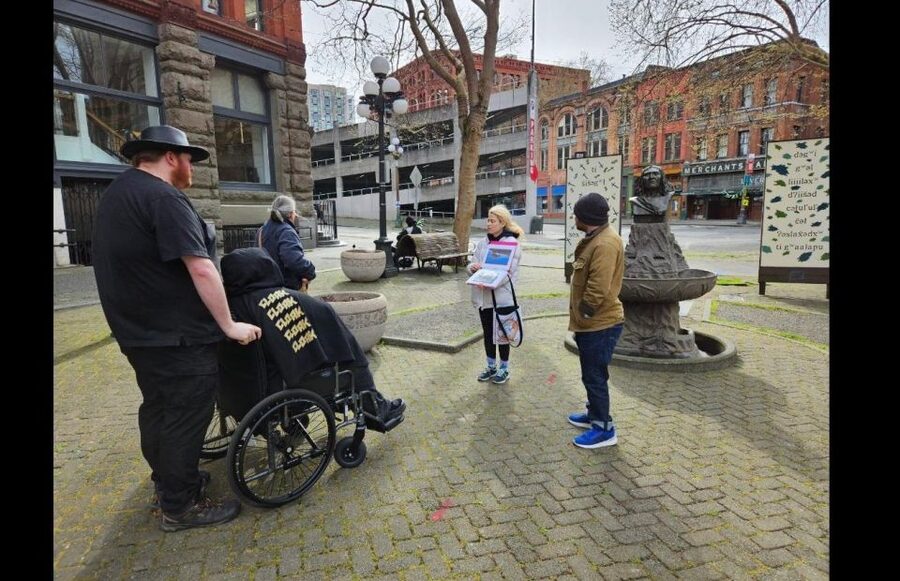
The Mayor closes the six-stop route with civic authority. After stories of identity, scandal, belief, and survival, a woman who held public office changes the question from how women lived in Seattle to how they helped direct it.
This final story can also reshape the earlier ones. Women do not appear only as victims, entertainers, outsiders, or troublemakers. One of the six held a formal role in the city. Putting that person beside the others shows how narrow historical labels can be.
The Mayor is a good reason to take this tour even if you already know the basic Pioneer Square story. You may have heard about Seattle’s public buildings and early leaders, but this route asks who else influenced the city and who was remembered on official terms.
What the route tells you about Pioneer Square
The walk covers six stops within roughly five blocks. That compact footprint is a real advantage. You get a sense of place without spending the afternoon crossing downtown, and the route should be manageable for people who prefer short walks with frequent stops.
You will see the historic district as it looked a century ago through stories, old images, and the surviving setting. The tour is not a museum visit, and it does not promise entry to each location. Its strength is the connection between the street in front of you and the person being discussed.
The route is listed as wheelchair accessible. Still, a walking tour in an older district can involve ordinary street conditions, crowds, or uneven surfaces, so you may want to confirm any specific mobility needs when booking.
Morning departures are usually available. That timing works well if you want to follow the tour with other downtown plans, but remember to leave a little space after the advertised 1.5 hours. The guide’s storytelling and questions can extend the experience toward two hours.
Carter’s storytelling style and the small-group advantage
The strongest part of this activity is the guide-led format. Carter presents information through pictures, facts, settings, and stories rather than asking you to absorb a lecture while staring at a building.
Her delivery is described as engaging, funny, and eloquent. Those qualities matter on a subject that includes grim events. Humor can keep the pace moving, while clear storytelling helps prevent hard material from becoming a string of shocking anecdotes.
Carter also handles questions beyond the standard talk. That is useful if you already know Seattle basics or if one of the women’s stories raises a question about the city today. The group limit of 10 should make those exchanges practical.
The tradeoff is that this tour depends heavily on the guide. If you want a self-guided route with lots of time for photographs, this is not the best format. You are paying for interpretation and connection, not just access to a street.
Is $35 a fair price?
At $35 per person, the tour sits in a reasonable range for a focused, live walking experience. You are getting roughly 1.5 to 2 hours with a specialist guide, six stops, original research and presentation, visual material, and a group capped at 10.
The value is strongest if you care about stories you would not find easily through a quick search or a standard city history tour. The tour’s subject mix is specific, and the women’s lives connect across a small area. That focus gives you something different from a general Pioneer Square overview.
The value is weaker if your main goal is to see a large number of landmarks, enter historic buildings, or cover all of Seattle’s major attractions. This is not a substitute for the Space Needle, Chihuly Garden and Glass, a harbor cruise, or a wider city tour. It works best as a human-scale history choice alongside those bigger sights.
Free cancellation up to 24 hours before the start and a reserve-now, pay-later option reduce the risk of fitting it into a changing schedule. Children under 14 are not suitable for the tour, and English is the only listed language.
Who should book this tour?
I would choose this walk if you enjoy overlooked biographies, women’s history, social history, or stories that do not end with a simple hero. It is also a strong pick if you have already seen Seattle’s headline sights and want a more local, unusual way to understand Pioneer Square.
The compact route suits you if you want to walk but do not want a long city march. The small group suits you if you value questions and direct contact with the guide. It could also work well for an adult birthday or a bachelorette weekend, provided the group is comfortable with the mature material.
I would hesitate if you are traveling with young children, avoiding discussions of sex work and addiction, or hoping for a broad survey of Seattle architecture. The title promises six women, and that is exactly the focus.
FAQ
Where does the Six Women historical walking tour meet?
The group meets in front of Cherry Street Coffee House in Seattle.
How long does the tour last?
The activity is listed as 1.5 hours, while the tour description calls it a two-hour walk. One recorded experience lasted about 1 hour and 45 minutes, so allow close to two hours.
How much does the tour cost?
The price is $35 per person.
How many people can join the tour?
The group is limited to 10 participants.
What language is the tour offered in?
The tour is offered in English.
Is the walking tour wheelchair accessible?
Yes. The activity is listed as wheelchair accessible.
Is the tour suitable for children?
No. Children under 14 are not suitable for this tour.
What subjects are covered on the tour?
The six featured figures are described as a Native Princess, a Gay Icon, a Swindler, a Zealot, a Madame, and a Mayor. Their stories are connected to locations around Pioneer Square.
Does the tour include adult themes?
Yes. The stated warnings include addiction, prostitution, suicide, and foul language.
Should you book Six Women?
Book it if you want Seattle history told through unusual lives rather than famous landmarks. For $35, the small group, compact route, visual material, and Carter Lee Churchfield’s long experience make a good case, especially if you have already covered the city’s major attractions.
Skip it if you need a child-friendly outing or a broad architectural survey. For an adult who enjoys complicated characters and rarely discussed local history, this is a smart, focused way to spend a morning in Pioneer Square.
Just added around Seattle
- Native Culture – Suquamish and Chief Seattle★ 5.0 · 3 reviews
- Break It and Make It: A Glass Fusing Session in Everett★ 4.5 · 3 reviews
- Bainbridge Island Discovery and Wine Tour★ 5.0 · 3 reviews
- Seattle: Twilight Tour and Olympic National Park★ 5.0 · 3 reviews
- Beaches, Bites and Bavaria in Leavenworth: A Self-Guided Audio Tour★ 3.5 · 3 reviews
- Seattle: Lake Union Happy Hour Cruise★ 3.7 · 3 reviews
- Seattle: Lake Union Kayak Tour – Small Groups, Big Views★ 5.0 · 3 reviews
- Sail Bainbridge Island & Seattle Waters – Classic Sailboat★ 5.0 · 3 reviews
Historical Tours, compared.




Henry Art Tours-Come See the Fun Side of Seattle Art/Pubs/History
Read our review →
Seattle Downtown Quest: Self-Guided History Adventure
Read our review →

Bite-Sized Seattle History & Food by Go West Tours
Read our review →Browse the lists this tour appears in