Reviewed · TOURS
Seattle: Mt. St. Helens National Monument Small Group Tour
Mt. St. Helens is not just a mountain with a dramatic view. It is a volcano whose 1980 eruption reshaped the ground, forests, lakes, and lives around it. This 12-hour trip gives you a close look at that change, with a naturalist guide, short walks, wildlife watching, and a picnic lunch instead of a quick photo stop.
I especially like the small group of no more than 10 people, which gives the day a more personal feel than a large coach tour. I also like the mix of stops: Nisqually wetlands, old-growth forest, volcanic terrain, and Coldwater Lake. The main drawback is the long day and the current closure of the road to Johnston Ridge. You still get strong views from the Coldwater Science and Learning Center, but the classic Johnston Ridge viewpoint is not part of the route at present.
In This Review
- Key points to know before booking
- Why Mt. St. Helens is worth a full day
- A 7:00 to 7:30 a.m. Seattle pickup
- First stop: Nisqually wetlands and wildlife
- Lewis and Clark State Park and the old forest
- The interpretive center puts the eruption in context
- Walking through the Hummocks and eruption zone
- Coldwater Lake and the replacement for Johnston Ridge
- The long ride back to Seattle
- Is $326 a fair price?
- Who should book this Mt. St. Helens tour?
- Final verdict: book it for the guide, not just the photograph
- FAQ
- How long is the Mt. St. Helens tour from Seattle?
- Where does pickup take place?
- What time does hotel pickup happen?
- Is Johnston Ridge Observatory included?
- Is lunch included?
- What should I bring?
- Are park fees included?
- Can children join the tour?
- Can I cancel the tour?
Key points to know before booking
- The volcano is the main event: You will see the area reshaped by the 1980 eruption, including barren ground, new forest growth, and views toward the crater.
- Coldwater replaces Johnston Ridge for now: A 2023 mudslide blocks Spirit Lake Highway about nine miles before Johnston Ridge Observatory.
- The day includes real walking: Plan on a guided walk at Nisqually, a forest stop, and about two hours around Mt. St. Helens.
- Your guide adds the meaning: Natural history, geology, plants, wildlife, and reforestation are central to the day.
- Lunch and drinks are included: You get a seasonal picnic from a local female-owned catering partner, plus coffee, tea, snacks, and refreshments.
- The $326 price buys convenience: Hotel pickup, park fees, transport, food, and a very small group are included, but the price will feel high if you mainly want a single mountain photograph.
Why Mt. St. Helens is worth a full day
From Seattle, Mt. St. Helens is not a casual side trip. The drive takes much of the day, but that distance is part of the story. You move from city streets to wetlands, then old forest, and finally the broad volcanic zone around the mountain.
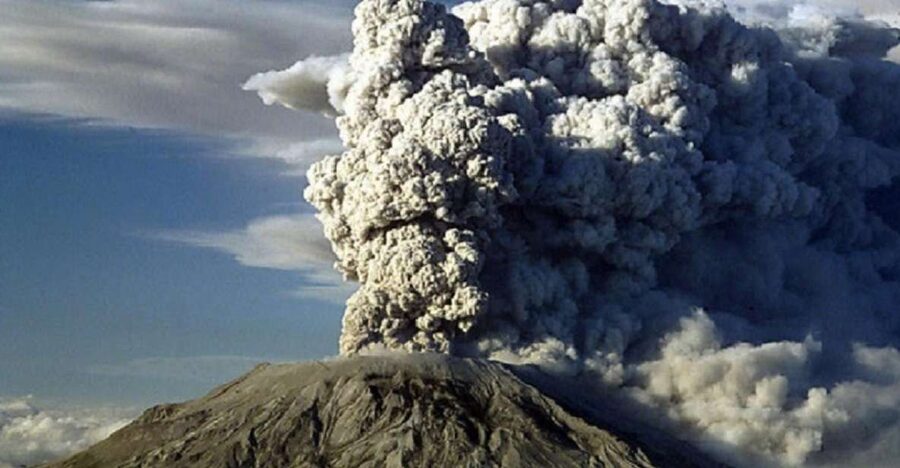
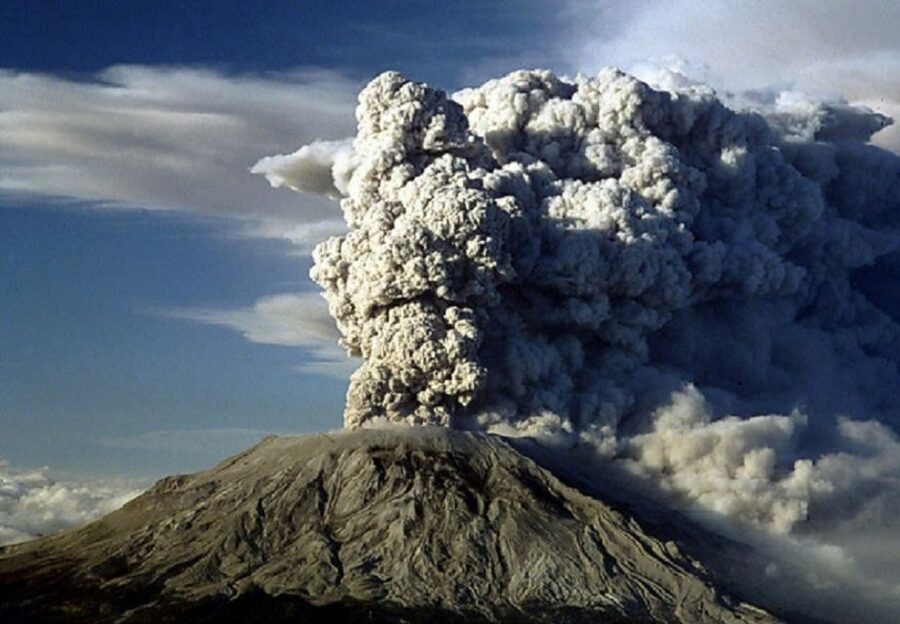
The 1980 eruption changed the shape of the summit and flattened huge areas of forest. The tour helps you see that change in stages. Instead of simply pointing at the volcano, the guide can explain what you are looking at and why plant life has returned in uneven patterns.
That context matters. Without it, the gray slopes, young trees, lakes, and scattered dead trunks can look like a series of unrelated views. With a naturalist guide, the area becomes an outdoor lesson in geology and recovery.
The trip is also a good choice if you want more than a viewpoint. You will have time for short walks, photographs, wildlife watching, interpretive displays, and a picnic beside the water. The pace is active but not built around a strenuous climb.
Other Seattle trips people book alongside this one:
- Beneath The Streets Underground History Tour
★ 4.5 · 8,006 reviews - Chef Guided Food Tour of Pike Place Market
★ 5.0 · 3,733 reviews - Mt. Rainier National Park Highlights Tour
★ 5.0 · 3,156 reviews
A 7:00 to 7:30 a.m. Seattle pickup
The day begins early. Hotel pickup in downtown Seattle takes place between 7:00 and 7:30 a.m., with the exact time confirmed the day before. You should wait at your hotel’s main entrance about five minutes early.
Pickup is available at downtown hotels, Airbnbs, and rental accommodations. If you are staying outside downtown, you can meet at the local partner’s office or the Sheraton Grand Hotel at 1400 6th Avenue. Pickup options in SeaTac and Tacoma may also be available, but you need to ask about the exact location.
You ride in a high-roof passenger van, not a full-size bus. That makes the long drive easier to manage and lets the guide speak with the group without shouting. The tradeoff is simple: van seats offer less room than a coach, and you should not bring luggage or large bags.
The tour is limited to 10 people. That size works well for questions and short nature walks. It also means that the day depends on everyone being ready at each stop, so this is not a good fit if you prefer to wander off alone or set your own pace.
First stop: Nisqually wetlands and wildlife
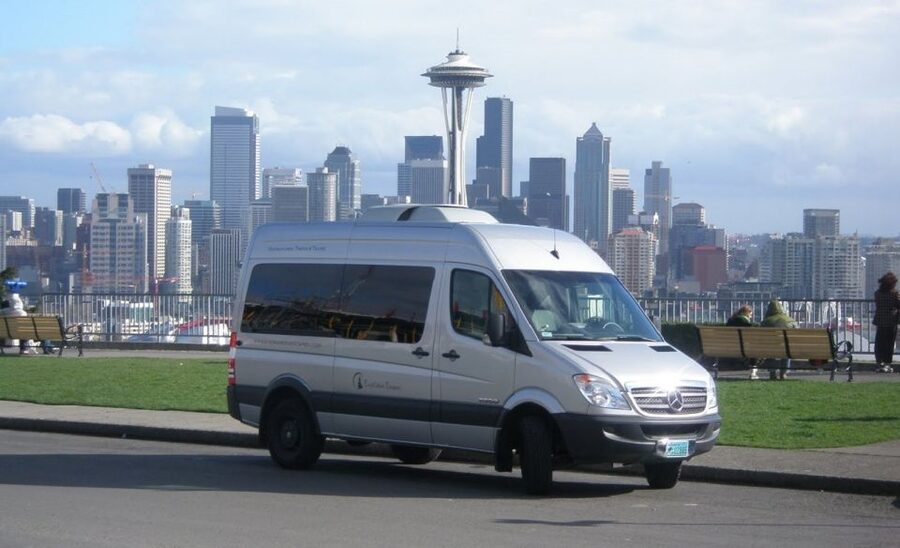
After about an hour in the van, the group stops at Billy Frank Jr. Nisqually National Wildlife Refuge for around 15 minutes. This is a short introduction to the region, with time for coffee or tea, a light snack, a brief walk, and wildlife viewing.
The refuge protects estuary wetlands, where river and tidal water meet. It gives you a useful contrast with the volcanic area later in the day. Here, the focus is birds, wetlands, and the living systems around the water.
Fifteen minutes is not long. You should treat this as a quick orientation stop rather than a full visit to the refuge. Bring binoculars if you have them, since wildlife sightings depend on timing and conditions. The operator specifically encourages binoculars and cameras.
This stop is most valuable for people who enjoy seeing how several kinds of habitat fit into one day. If your only goal is Mt. St. Helens, you may find the pause a little slow. If you enjoy plants and wildlife, it adds useful variety before the longer drive south.
Lewis and Clark State Park and the old forest
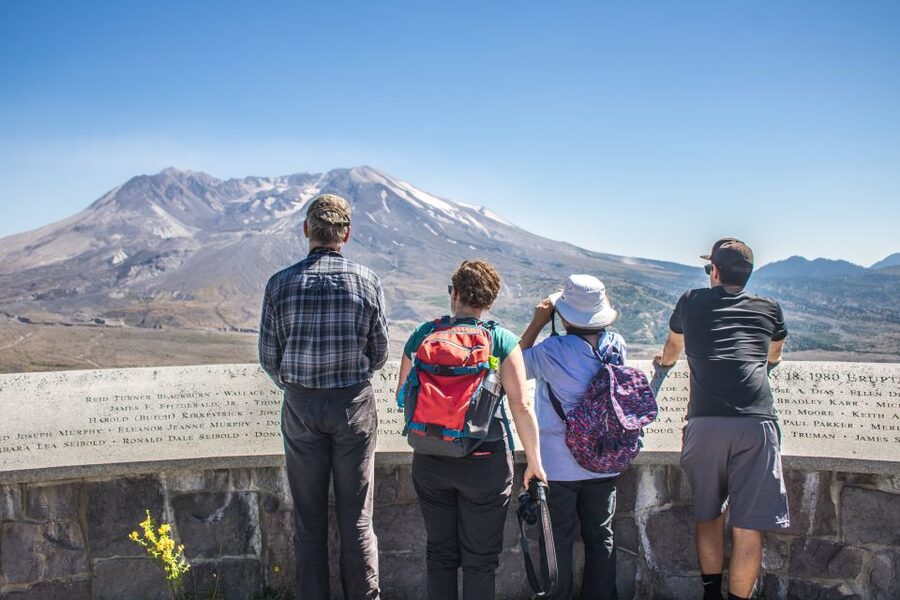
The next major stop comes after roughly 75 minutes on the road. At Lewis and Clark State Park, you spend about 30 minutes walking through old-growth forest under the guidance of the naturalist.
This stop shows you the type of forest that once covered the northern reaches of Mt. St. Helens. It is a helpful before-and-after comparison. Later, the volcanic zone will look open, stark, and heavily altered. Here, the tall trees give you a sense of what the mountain’s forests were like before the eruption.
The walk is described as guided rather than strenuous. Still, wear comfortable shoes and warm clothing. Weather can shift quickly around the mountain, and this tour operates rain or shine.
Past guides have included Brent and Natasha. Brent was specifically praised for his strong command of the subject, while Natasha was noted for a well-run and informative day. Since guide assignments can change, you should think of those names as examples of the operator’s guiding style, not a promise that one particular person will lead your trip.
Something different, still within Seattle:
- Seattle: Guided Underground Walking Tour
★ 4.6 · 2,144 reviews - Seattle’s Original Guided Harbor Cruise
★ 4.5 · 2,077 reviews - Seattle City Highlights Tour
★ 5.0 · 2,000 reviews - Seattle: Space Needle & Chihuly Garden and Glass Ticket
★ 4.7 · 1,890 reviews
The interpretive center puts the eruption in context
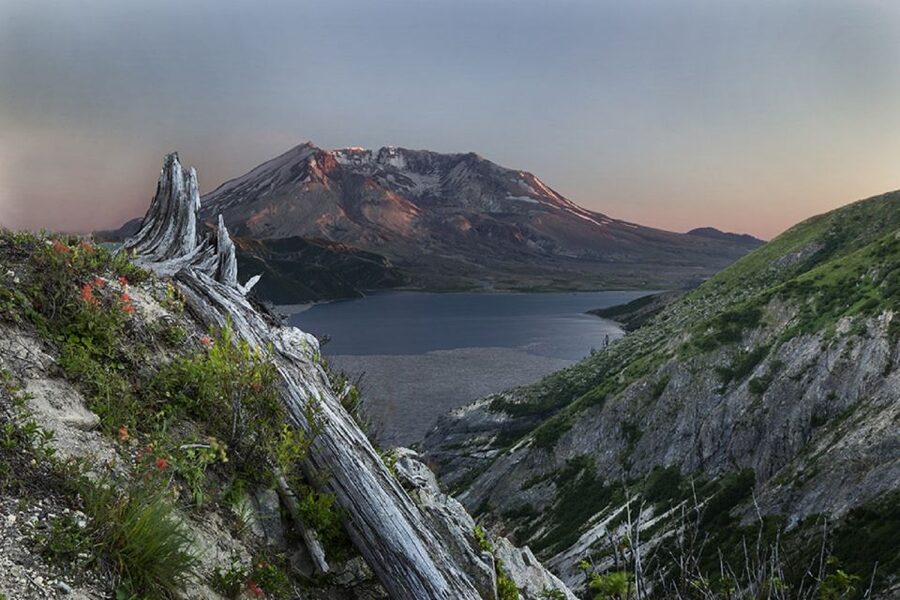
After another drive, the group stops at the Washington Parks Mt. St. Helens Interpretive Center for about an hour. This is the place to pause and organize what you have seen so far.
Interpretive displays can make the 1980 eruption easier to understand than a distant crater view alone. You can spend time with photographs and explanations of the eruption, the mountain’s geology, and the area’s natural history.
You also get a chance to take photographs and learn more before heading into the main volcanic zone. This stop is especially useful if you do not already know the basic story of Mt. St. Helens.
The tour’s best feature is the way the guide links these indoor displays with the outdoor stops. The forest at Lewis and Clark State Park, the wetlands at Nisqually, and the changed ground around the volcano all become parts of one larger story.
Walking through the Hummocks and eruption zone
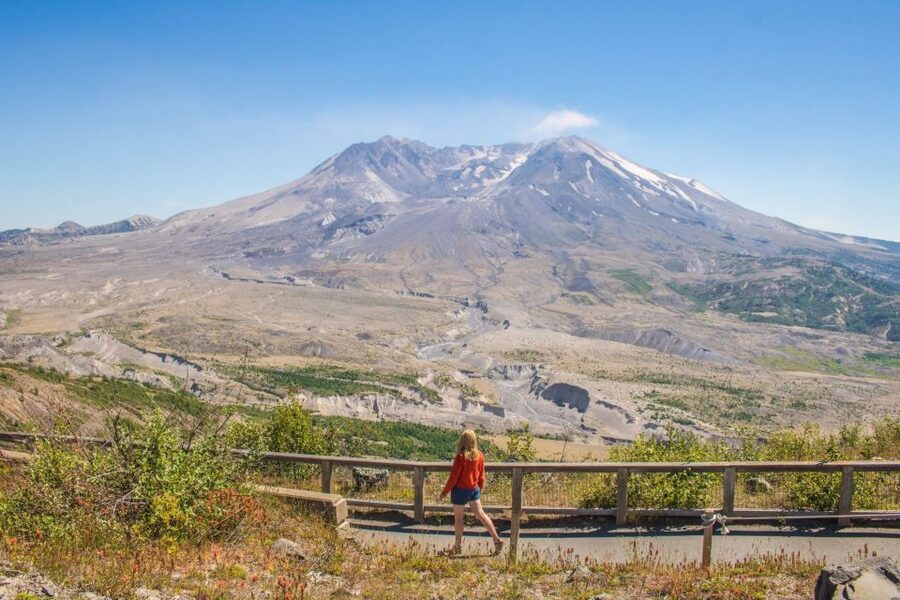
The heart of the day comes at Mt. St. Helens itself. You have about two hours for lunch, walking, and hiking around the monument area.
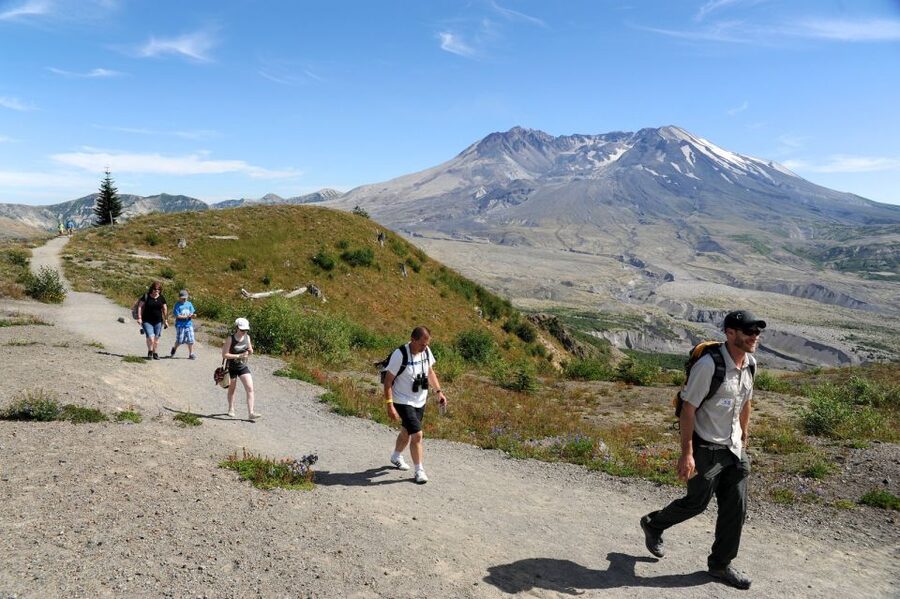
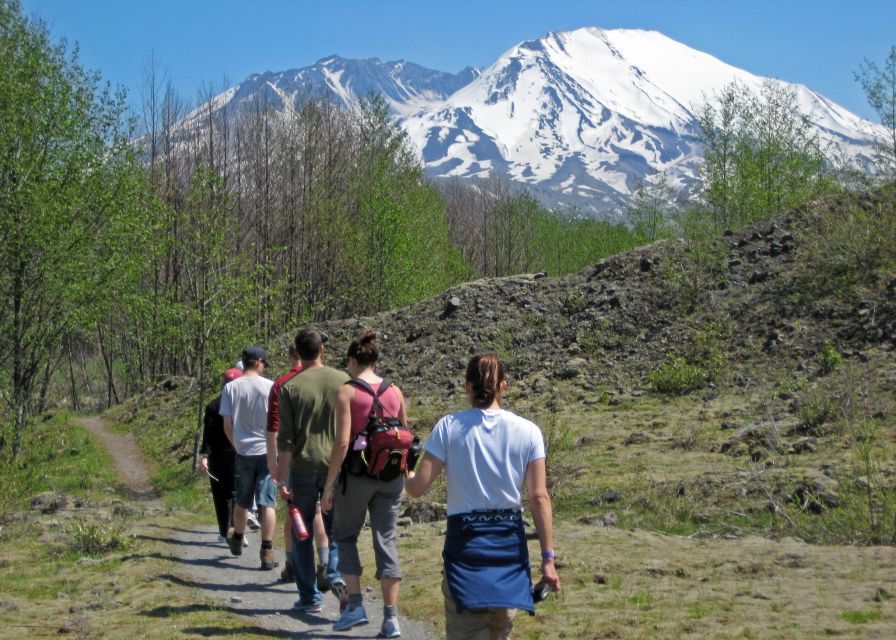
One likely highlight is the Hummocks Trail, a peaceful walk across terrain formed by debris from the eruption. The word peaceful may sound odd in a place associated with such destruction, but that contrast is part of what makes the walk worthwhile. You see a quiet setting shaped by a sudden event.
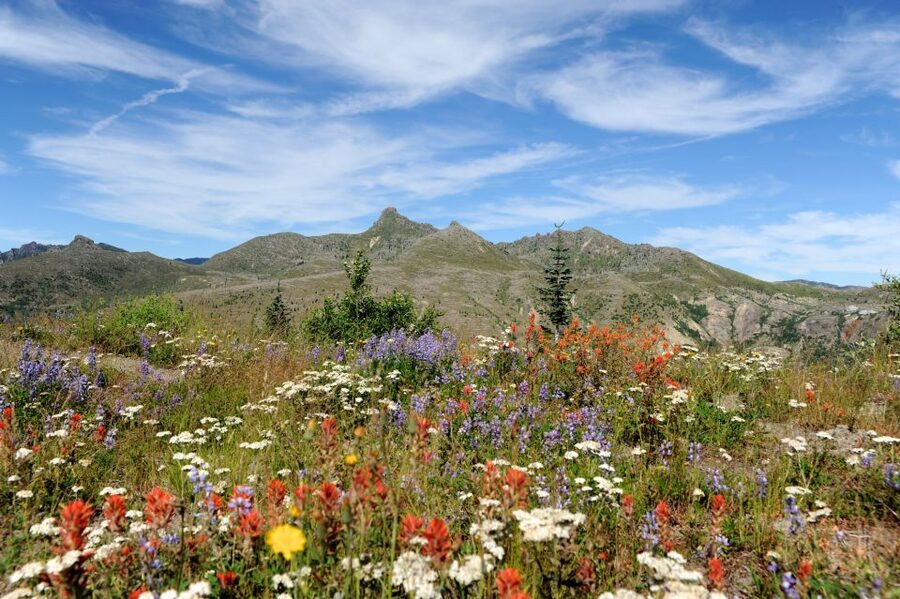
The terrain is also where the geology becomes easiest to grasp. Rather than viewing the mountain from a single distant point, you can look at the ground under your feet, the vegetation returning around you, and the altered forms left by the eruption.
This is not advertised as a summit hike. You should expect naturalist-guided walks and geological sightseeing, not a demanding ascent. The exact walking conditions depend on weather and season. In winter, snowshoes are provided if needed.
Lunch is a seasonal picnic prepared by a local female-owned catering partner. It is eaten near Coldwater Lake, and dietary restrictions or allergies should be reported at least 48 hours ahead of time. Coffee or tea, a light morning snack, assorted snacks, flat water, mineralized water, and other refreshments are included throughout the day.
The picnic is a real advantage on a remote outing. You do not need to spend time searching for food, and you can eat near the scenery instead of inside a roadside restaurant. Food preferences can vary, so it is sensible to ask what the seasonal menu includes before booking if lunch is important to you.
Coldwater Lake and the replacement for Johnston Ridge
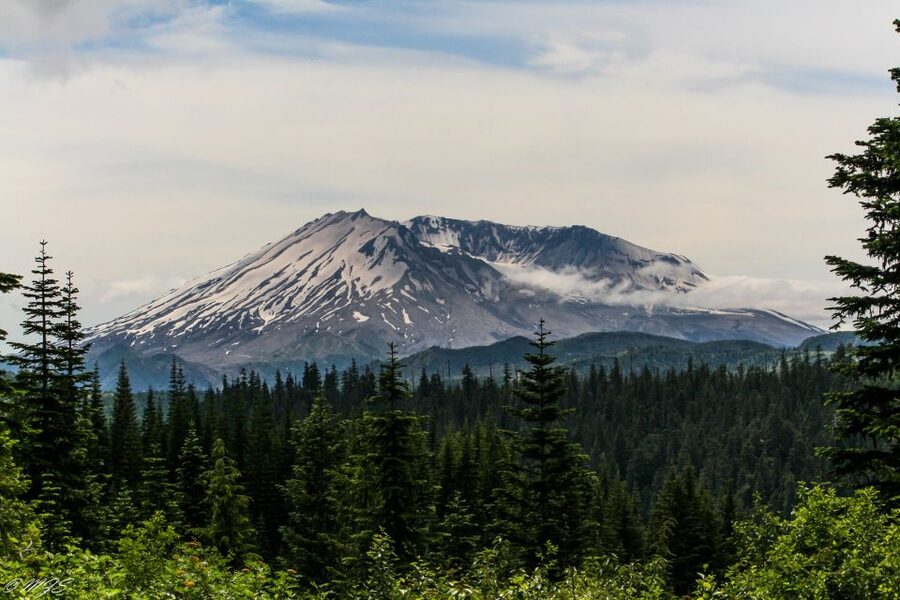
The final major stop is the Science and Learning Center at Coldwater, reached after about 40 minutes from the main Mt. St. Helens area. You spend roughly an hour here taking photographs, viewing scenery, reading interpretive information, and possibly browsing for a small gift.
This stop matters because access to Johnston Ridge Observatory is currently blocked. On May 14, 2023, rapid snowmelt after an unusually warm spring weekend caused a major mudslide on Spirit Lake Highway. The road is blocked about nine miles before Johnston Ridge, so the classic Johnston Ridge viewing area is not accessible on this tour.
The Science and Learning Center at Coldwater sits on a ridge and offers a similar type of high viewpoint. On clear days, it provides the most direct view into the crater available on this route, along with views over Coldwater Lake.
There is an important practical distinction here. Similar views does not mean identical views. If Johnston Ridge is the one place you have always wanted to see, check the current road situation before booking and understand that the itinerary may use Coldwater instead. If your goal is to see the mountain, crater, and recovery zone with an expert guide, Coldwater remains a worthwhile substitute.
Clouds can also hide the crater. The tour runs rain or shine, and clear weather is not guaranteed. Bring a camera, but keep your expectations flexible. A misty day may offer fewer wide views but can still provide useful walks and interpretation.
The long ride back to Seattle
After Coldwater, the van begins the return journey. The listed driving time is about three hours, with a 15-minute viewpoint break along the way.
That return ride is the least exciting part of the day, but it is also why the small van and included refreshments matter. You will have already spent hours on the road before reaching Seattle. This is a better fit for someone who accepts a long day in exchange for reaching a remote national monument without renting a car.
You are expected back in downtown Seattle at the end of the trip, with drop-off at the original hotel area. The schedule can shift with traffic, weather, and time spent at the stops, so avoid booking a tight evening commitment.
Is $326 a fair price?
At $326 per person, this is not a bargain day trip. It is priced as a small-group guided outing, not as basic transport.
The fee includes:
- Downtown hotel pickup and drop-off
- Transportation in a high-roof passenger van
- An expert naturalist guide
- Park entry fees
- Seasonal picnic lunch
- Morning coffee or tea and a light snack
- Snacks and refreshments
- Snowshoes in winter when necessary
That package has real value. You avoid driving a long distance, navigating mountain roads, arranging food, and paying separate entry fees. You also get a guide who can explain plants, geology, wildlife, and local history during the day.
The price makes the most sense if you value interpretation and convenience. It is less compelling if you are comfortable driving yourself and want only a quick viewpoint. A self-guided visit may give you more control over timing, but it will not provide the same built-in transportation, picnic, or personal instruction.
The very small group is another part of the value. Earlier versions of this type of outing were praised for avoiding mass-tour treatment and for including extras such as fresh coffee, all-day drinks, and snacks. That personal feel is likely to matter most during the walks, when a guide can answer questions and point out plants rather than simply reciting facts from the front of a bus.
Who should book this Mt. St. Helens tour?
I would recommend it to adults and older children who enjoy nature, geology, photography, and guided walking. The minimum age is 10, so families with younger children will need another plan.
It suits you if you want to see several sides of the region in one day:
- Wetland habitat and wildlife
- Old-growth forest
- The history of the 1980 eruption
- Volcanic terrain and reforestation
- Coldwater Lake and crater views
It is less suitable if you need wheelchair access, since the tour is not designed for wheelchair users. You should also tell the operator about medical concerns such as environmental allergies, heart conditions, mobility limits, or motion sickness.
Comfortable shoes and warm clothing are essential. Do not bring pets, drones, luggage, or large bags. The van ride is long, so motion sickness concerns should be discussed with the operator in advance.
Final verdict: book it for the guide, not just the photograph
Book this tour if you want Mt. St. Helens explained as a living place, not simply photographed from a road. The strongest reasons are the limited group size, the naturalist-led walks, the picnic, and the range of habitats covered in one day.
Before paying, make sure you are comfortable with the 12-hour schedule, the $326 cost, the rain-or-shine policy, and the current Coldwater access plan. If Johnston Ridge reopens, the route may change, but for now Coldwater is the key viewpoint.
My call: this is a good choice for a first visit from Seattle, especially if you do not want to drive. It offers more substance than a basic sightseeing run, though the long day and high price mean you should book only if you genuinely enjoy time outdoors and guided interpretation.
FAQ
How long is the Mt. St. Helens tour from Seattle?
The tour lasts 12 hours, including transportation, guided walks, sightseeing stops, lunch, and the return to downtown Seattle.
Where does pickup take place?
Pickup is available from downtown Seattle hotels, Airbnbs, and rental accommodations. The default meeting point for people staying outside downtown is the Sheraton Grand Hotel at 1400 6th Avenue.
What time does hotel pickup happen?
Hotel pickup takes place between 7:00 and 7:30 a.m. The operator calls the day before to confirm your exact pickup time. You should be at the hotel’s main entrance five minutes early.
Is Johnston Ridge Observatory included?
No. A mudslide on Spirit Lake Highway currently blocks access about nine miles before Johnston Ridge Observatory. The tour uses the Science and Learning Center at Coldwater instead, which offers similar views from a ridge.
Is lunch included?
Yes. A seasonal picnic lunch from a local female-owned catering partner is included. You should report allergies or dietary restrictions at least 48 hours before the tour.
What should I bring?
Bring comfortable shoes, warm clothing, binoculars if you have them, and a camera. The tour operates rain or shine.
Are park fees included?
Yes. All park entry fees are included in the tour price. Snowshoes are also provided in winter if they are needed.
Can children join the tour?
Children must be at least 10 years old. The tour is not suitable for children under 10.
Can I cancel the tour?
You can cancel up to 24 hours before departure for a full refund. You can also reserve now and pay later, subject to the booking terms.
Just added around Seattle
- Native Culture – Suquamish and Chief Seattle★ 5.0 · 3 reviews
- Break It and Make It: A Glass Fusing Session in Everett★ 4.5 · 3 reviews
- Bainbridge Island Discovery and Wine Tour★ 5.0 · 3 reviews
- Seattle: Twilight Tour and Olympic National Park★ 5.0 · 3 reviews
- Beaches, Bites and Bavaria in Leavenworth: A Self-Guided Audio Tour★ 3.5 · 3 reviews
- Seattle: Lake Union Happy Hour Cruise★ 3.7 · 3 reviews
- Seattle: Lake Union Kayak Tour – Small Groups, Big Views★ 5.0 · 3 reviews
- Sail Bainbridge Island & Seattle Waters – Classic Sailboat★ 5.0 · 3 reviews
Tours, compared.