Reviewed · TOURS
From Seattle: Mt Saint Helen Tour
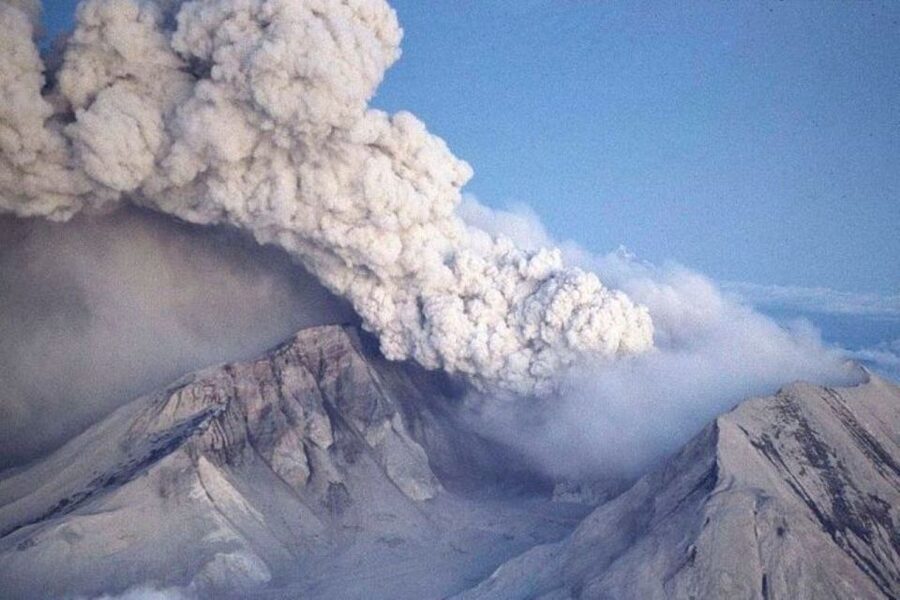
Mount St. Helens is not simply a pretty volcano viewed from a distance. It is a place where the force of one eruption remains visible in the shape of the mountain, the forests, the lakes, and the broad blast zone. This tour gives you a full day to see that change up close, with Johnston Ridge Observatory as the main event.
I like the small group size, capped at 14, and I like having a guide explain the geology and human story as you go. The flexibility also matters: Chad has been especially patient about questions and time at displays, while Bob has taken a private group to Ape Cave and the south side of the volcano. The main drawback is the long day from Seattle, with meals not included and the observatory open only seasonally.
In This Review
- Key points about the Mount St. Helens day trip
- Why Mount St. Helens feels different from a normal volcano visit
- The Seattle pickup and the long road south
- Mount St. Helens scenic views during the main visit
- Coldwater Ridge Visitor Center sets the scene
- Johnston Ridge Observatory in the 1980 blast zone
- Coldwater Lake and the return through recovering country
- Guide quality can shape the whole day
- Is $285 a fair price?
- Who should book this experience?
- Should you book the Seattle Mount St. Helens tour?
- FAQ
- Where does the Mount St. Helens tour begin and end?
- How long does the experience last?
- What locations are included?
- How much does the tour cost?
- Is transportation included?
- Is food included?
- What language is the tour conducted in?
- How large is the group?
- Is Johnston Ridge Observatory open all year?
Key points about the Mount St. Helens day trip
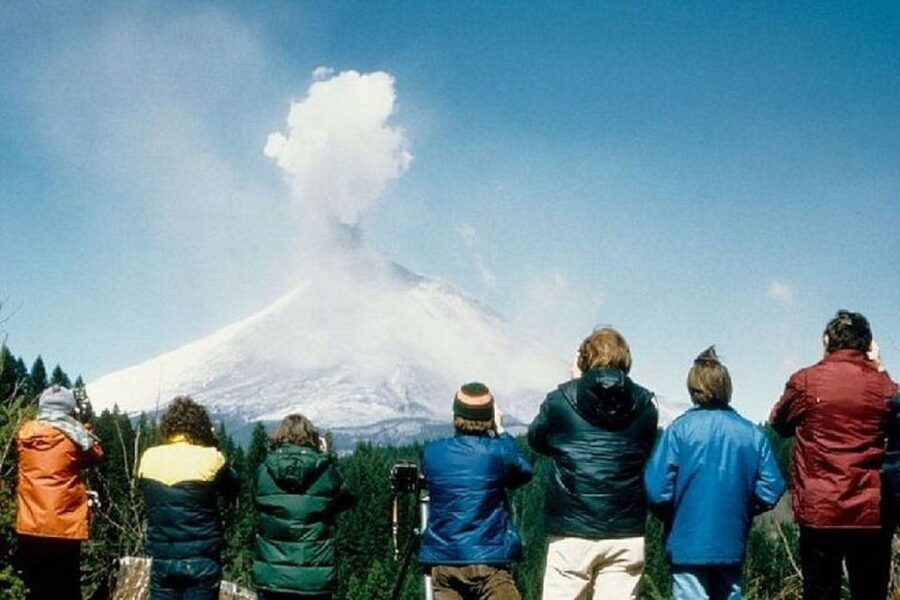
- Johnston Ridge puts you in the 1980 blast zone: The observatory sits about 8 kilometers north of the summit, with monitoring equipment and views toward the volcano.
- Coldwater Ridge adds context before the main viewpoint: This stop helps you understand the eruption, recovery work, and local natural history.
- The tour stays small: Groups are limited to 14 people, making it easier to ask questions and hear the guide.
- Chad and Bob bring different strengths: Chad is known for patience and flexibility, while Bob has handled a private itinerary that included Ape Cave and the south side.
- Coldwater Lake shows nature returning: The lake and surrounding plant and animal life are part of the region’s ongoing recovery.
- The price includes transport and bottled water: At $285 per person, the value depends on how much you want guidance and door-to-door service from Seattle.
Why Mount St. Helens feels different from a normal volcano visit
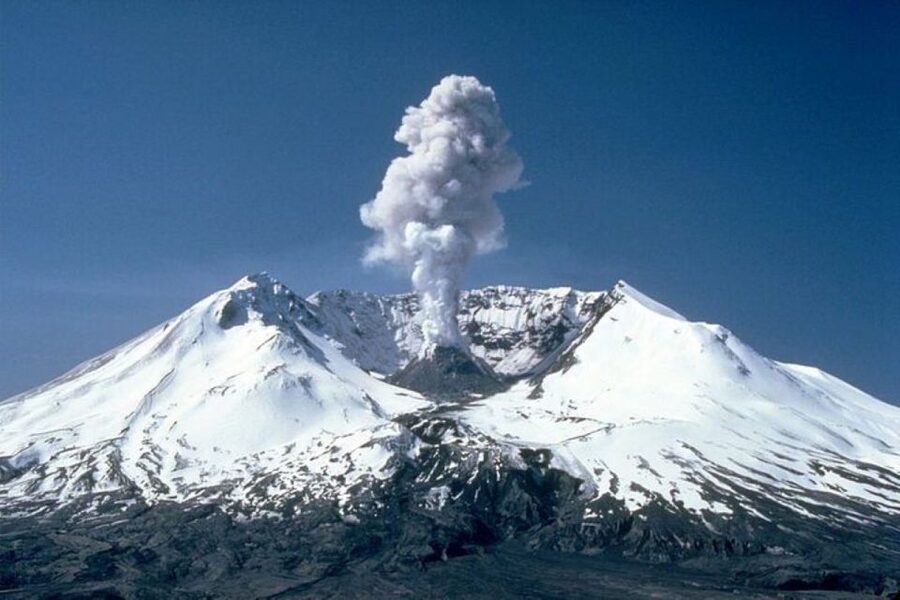
Many volcano trips give you a distant cone and a good photo. Mount St. Helens gives you evidence of sudden change on a huge scale. The May 18, 1980 eruption removed the mountaintop and permanently altered the surrounding ground. It also claimed 57 lives, including USGS volcanologist David Johnston, whose name is now attached to the ridge and observatory.
That human detail matters. At Johnston Ridge, the story is not just about lava and ash. You are also learning about the people who watched the volcano, the danger they faced, and the scientific work that continues today.
The area also gives you a close look at reforestation and wildlife recovery. Flora and animals are part of the story, not decoration around it. You can see how a place affected so dramatically by an eruption is being studied and renewed over time.
I find this kind of setting more useful than a simple scenic stop because it gives your view a reason. The mountain may look quiet now, but the evidence around it explains what happened.
Other Seattle trips people book alongside this one:
- Beneath The Streets Underground History Tour
★ 4.5 · 8,006 reviews - Chef Guided Food Tour of Pike Place Market
★ 5.0 · 3,733 reviews - Mt. Rainier National Park Highlights Tour
★ 5.0 · 3,156 reviews
The Seattle pickup and the long road south
The day begins with pickup in Seattle and ends with drop-off there. The full experience lasts about nine hours, so you should treat it as a serious day trip rather than a quick excursion.
That long ride is part of the tradeoff. You avoid arranging your own route, parking, and timing, but you spend a large part of the day in transit and at the sites. For someone without a car, or for anyone who would rather let a guide handle the driving and sightseeing order, that convenience has real value.
The guide speaks English, and the small-group format should make the ride more personal than a large coach outing. You can ask about the eruption, local natural history, or the geology as questions come up.
Bring breakfast or plan ahead. Breakfast and lunch are not included, though bottled water is provided. Since the day covers several stops, I would not count on the schedule leaving plenty of time to find food along the way.
Mount St. Helens scenic views during the main visit
The Mount St. Helens portion takes about four hours, including scenic views along the way. This is where the day begins to feel like more than a transfer from Seattle to a destination.
The changing views help you understand the scale of the trip. Instead of arriving at one viewpoint and leaving, you spend time moving through the area connected to the eruption and its aftermath. Your guide can connect what you see outside the vehicle with the geological and natural story discussed at the stops.
Four hours is also enough time to avoid rushing the central visit. You can look, listen, ask questions, and take photographs without treating every stop as a five-minute photo break.
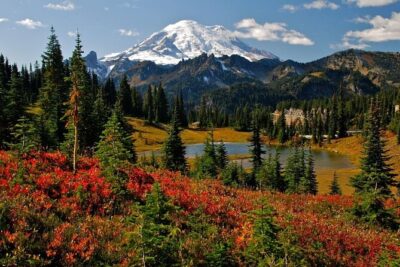
Still, the word scenic should not make you expect a purely postcard-style outing. Mount St. Helens is compelling partly because the views show destruction, exposed ground, recovering plant life, and the shape of a mountain changed forever. The beauty here is tied to the force of nature.
Coldwater Ridge Visitor Center sets the scene
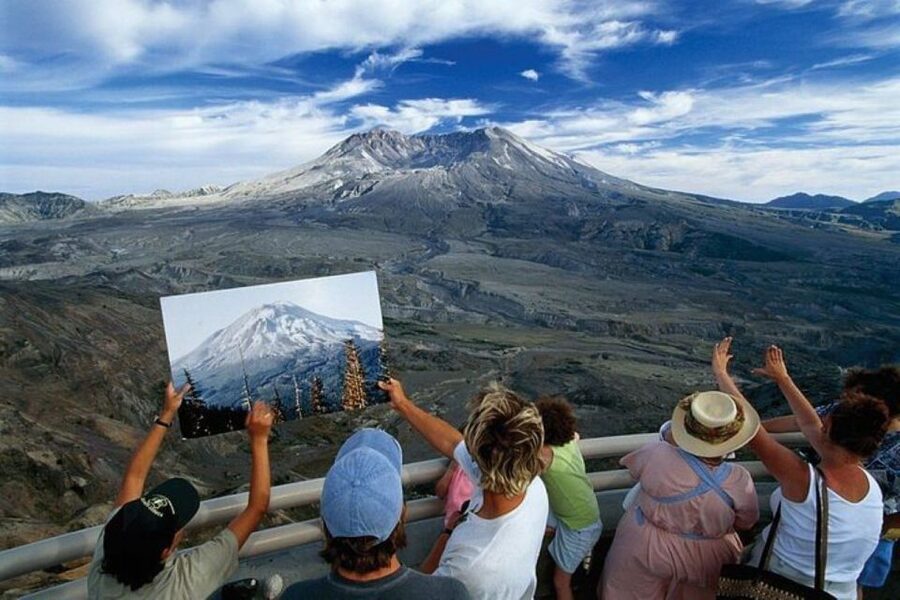
The Coldwater Ridge Visitor Center receives about an hour, with guided sightseeing. This is a useful first major stop because it gives you background before you reach Johnston Ridge.
If you arrive at the main observatory without context, you may see a dramatic mountain view but miss the meaning of the blast zone. Coldwater Ridge helps fill in that picture. Pay attention to the explanations of the eruption, local history, and the work involved in monitoring and studying the volcano.
An hour is long enough for a focused visit, but not so long that the day gets bogged down indoors. I would use this stop to ask your guide questions that will make the later viewpoint more meaningful.
The value here depends heavily on how the guide handles the visit. A guide who simply points you toward signs adds little. A guide who gives you time to read, then helps connect the information to what you see outside, makes the stop much better. Chad’s reported approach fits that need well. He has been patient while people read displays and ask questions, and he offers options at different stops instead of forcing everyone into one pace.
Something different, still within Seattle:
- Seattle: Guided Underground Walking Tour
★ 4.6 · 2,144 reviews - Seattle’s Original Guided Harbor Cruise
★ 4.5 · 2,077 reviews - Seattle City Highlights Tour
★ 5.0 · 2,000 reviews - Seattle: Space Needle & Chihuly Garden and Glass Ticket
★ 4.7 · 1,890 reviews
Johnston Ridge Observatory in the 1980 blast zone
Johnston Ridge Observatory is the centerpiece of the tour. It sits on Johnston Ridge in the middle of the 1980 blast zone, about 8 kilometers, or 5 miles, north of the summit.
The ridge was named for David Johnston, the USGS volcanologist on duty at the Coldwater II observation point when the eruption occurred. He was one of 57 people who died that day. Knowing this before you arrive changes how you read the name and how you see the ridge.
The observatory also houses seismic, deformation, and other monitoring equipment. These systems send data to the USGS Cascades Volcano Observatory for analysis. That detail gives the site a present-day purpose. You are not just looking at a historic event. You are also seeing a place tied to ongoing scientific work.
The visit is listed at about four hours, including sightseeing. That is a generous portion of the day, and it suits the site. You have time to take in the views, study the displays, listen to the guide, and consider the scale of the blast zone without racing back to the vehicle.
The observatory is open seasonally, so confirm that it will be operating for your date. This is the most important timing issue in the trip. A seasonal closure could change the character of the day, especially since Johnston Ridge is the key stop.
For the best experience, do not spend the entire visit taking photographs. Start with the broad view, then look for details in the terrain and vegetation. Ask the guide to explain what you are seeing. The point is not only to photograph the volcano, but to understand how the eruption reshaped the area.
Coldwater Lake and the return through recovering country
Coldwater Lake gets about an hour and includes guided touring. It offers a different view of the eruption zone from the ridge and helps round out the natural history side of the day.
The lake is part of the broader story of change after 1980. Around Mount St. Helens, reforestation and wildlife recovery are central to what you are seeing. Coldwater Lake gives the guide another setting in which to explain that process.
This stop may feel quieter than Johnston Ridge, which is a good thing. After the large views and heavy history at the observatory, a lake stop gives you time to notice the natural details. You might find that the smaller signs of recovery are as interesting as the dramatic mountain itself.
The stop lasts about an hour, so it is not designed as a long independent outing. Stay close enough to hear the guide and use the time to ask how the lake and surrounding area fit into the volcanic story.
After Coldwater Lake, you return to Seattle. Since the tour lasts nine hours overall, expect to arrive back tired but with a much fuller understanding of the mountain than you would get from a single roadside viewpoint.
Guide quality can shape the whole day
A guided geological trip lives or dies by the guide. The stops are important, but the explanations connect them.
Chad is a strong choice if you value a calm, flexible pace. He has been described as punctual, patient, accommodating, and willing to offer options at stops. That is especially useful at Johnston Ridge, where some people will want to read every display and others will want more time outside.
Bob has also led a memorable private tour that included Ape Cave and the south side of the volcano. This is worth noting, but you should not assume Ape Cave is included in the standard route described here. If that site is important to you, ask before booking about available alternatives, private touring, and the route for your specific date.
The group limit of 14 is a practical advantage. You are more likely to hear the guide, ask questions, and receive help with pacing than you would in a much larger group. It is not the same as a fully private trip, though, so the guide still has to balance different interests.
Is $285 a fair price?
At $285 per person, this is not a bargain outing. The price makes more sense if you place a high value on pickup and drop-off from Seattle, a full nine-hour day, a live English-speaking guide, and a small group.
Driving yourself could cost less in direct financial terms, but you would need to manage the route, fuel, parking, timing, and interpretation. You would also lose the easy chance to ask questions as the views and stops unfold.
The tour includes bottled water, but no breakfast or lunch. Add your own food costs and plan for the full day. If you are comparing this with a large bus tour, the smaller group and more flexible guiding may justify the higher price. If you already have a car and prefer to explore alone, the cost may feel steep.
I see the best value for visitors who want Mount St. Helens explained rather than simply photographed. The guide, not just the transportation, is what makes the price easier to defend.
Who should book this experience?
I would recommend this tour to you if you are staying in Seattle, do not have a rental car, and want a focused day at one of Washington’s most important natural sites.
It also suits people who enjoy geology, volcanic history, scientific monitoring, and the slow return of forests and wildlife. The long Johnston Ridge visit is a plus if you like time to read and ask questions rather than rushing from one viewpoint to another.
Families and mixed-interest groups may appreciate the guide’s flexibility, though the tour is not suitable for wheelchair users. If you need a very short outing, want a relaxed restaurant lunch built into the day, or prefer complete control over every stop, this is less likely to suit you.
The Ape Cave example also suggests that private or customized touring may be possible in some situations, but that should be confirmed directly. Do not book expecting Ape Cave unless it is specifically included in your arrangement.
You can cancel up to 24 hours before departure for a full refund, and the reserve-now, pay-later option keeps your plans flexible. Those policies are useful, but the seasonal opening of Johnston Ridge matters more when choosing your date.
Should you book the Seattle Mount St. Helens tour?
Book it if you want the easiest way to spend a full day learning what happened at Mount St. Helens and how the area is recovering. Johnston Ridge Observatory, Coldwater Ridge, and Coldwater Lake give you three useful angles on the story, while a group of no more than 14 keeps the day personal.
I would make two checks before paying: confirm that Johnston Ridge Observatory is open for your date, and ask which route and stops your guide will use. If you want Ape Cave or the south side, request that information clearly.
For a Seattle visitor without a car, the $285 price is reasonable when you value expert context and door-to-door transport. For a self-driving visitor who wants a cheaper, independent day, it may be less compelling. Either way, Mount St. Helens rewards more than a quick look, and this tour gives you the time to understand why.
FAQ
Where does the Mount St. Helens tour begin and end?
The tour provides pickup in Seattle and returns you to Seattle at the end of the day.
How long does the experience last?
The tour lasts about nine hours.
What locations are included?
The planned stops include Mount St. Helens, Coldwater Ridge Visitor Center, Johnston Ridge Observatory, and Coldwater Lake in Washington.
How much does the tour cost?
The listed price is $285 per person.
Is transportation included?
Yes. Pickup and drop-off are included.
Is food included?
No. Breakfast and lunch are not included. Bottled water is provided.
What language is the tour conducted in?
The live tour guide speaks English.
How large is the group?
The experience is offered as a small-group tour with up to 14 participants.
Is Johnston Ridge Observatory open all year?
The observatory is open seasonally, so you should check availability for your chosen date before booking.
Just added around Seattle
- Native Culture – Suquamish and Chief Seattle★ 5.0 · 3 reviews
- Break It and Make It: A Glass Fusing Session in Everett★ 4.5 · 3 reviews
- Bainbridge Island Discovery and Wine Tour★ 5.0 · 3 reviews
- Seattle: Twilight Tour and Olympic National Park★ 5.0 · 3 reviews
- Beaches, Bites and Bavaria in Leavenworth: A Self-Guided Audio Tour★ 3.5 · 3 reviews
- Seattle: Lake Union Happy Hour Cruise★ 3.7 · 3 reviews
- Seattle: Lake Union Kayak Tour – Small Groups, Big Views★ 5.0 · 3 reviews
- Sail Bainbridge Island & Seattle Waters – Classic Sailboat★ 5.0 · 3 reviews
Tours, compared.