
Reviewed · BOEING FACTORY TOURS
From Seattle: Boeing Factory and Future of Flight Tour
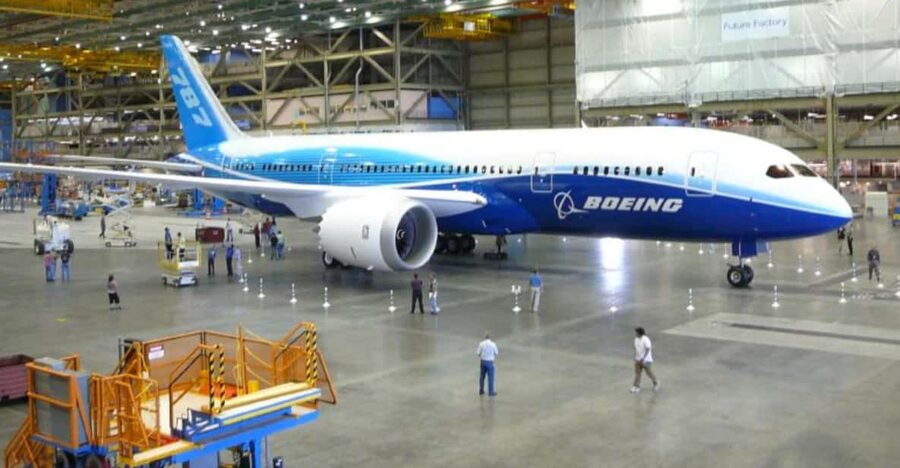
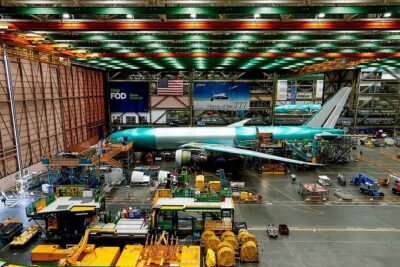
The giant Boeing factory in Everett is the main event: you look down into a working assembly plant where commercial jets take shape. I like the sheer scale of the place and the chance to see aircraft at different points in production, including the 777X line when operating. I also like the ride from Seattle, where guides such as James, Matthew, and DC fill the trip with Boeing and Seattle background.
The catch is that this is mainly a viewing tour, not a walk through the factory floor. You spend much of the factory visit looking down from elevated galleries, and the Future of Flight exhibits can feel rushed if the plant visit runs long.
In This Review
- Key points at a glance
- Why the Everett factory is worth the trip
- The 45-minute ride from downtown Seattle
- Entering the world’s largest building
- What you actually see on the factory tour
- Future of Flight, where the factory story widens
- The guides can make or break the day
- Is $125 a fair price?
- Who should book this Boeing experience?
- Practical advice for a smoother visit
- Should you book it?
- FAQ
- How long does the Boeing factory experience last?
- Where is pickup in downtown Seattle?
- Can I bring my phone or camera into the Boeing factory?
- How tall must children be to take the factory tour?
- Is the tour wheelchair accessible?
- Can I use a restroom during the factory tour?
Key points at a glance
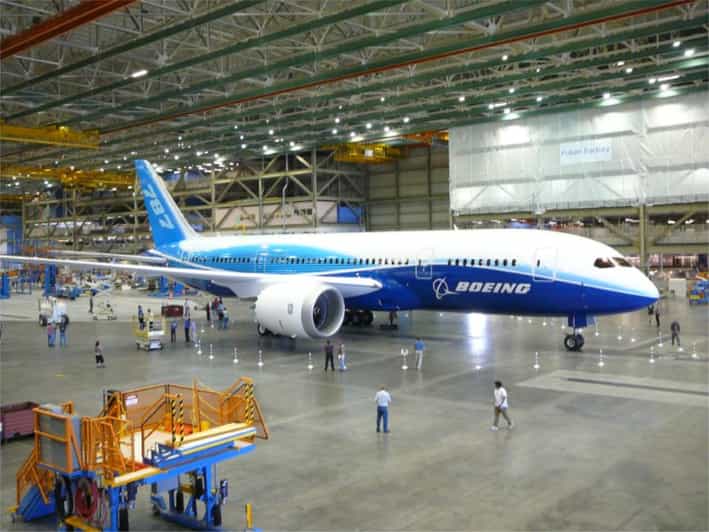
- The Everett building is enormous: You enter one of the world’s largest buildings and see aircraft assembly from elevated viewing areas.
- The 747, 777, and 787 are part of the story: The site connects Boeing’s past with current production, including the 777X when the line is active.
- The bus ride adds real value: Your guide may cover William Boeing, Seattle history, local neighborhoods, and aircraft-spotting points before you reach Everett.
- The Strato Deck is the photo stop: It gives you a broad view for watching aircraft and seeing how small people look beside the jets.
- Future of Flight adds context: Interactive displays, a flight simulator, and a Dreamliner cabin mockup help explain what comes after the factory floor.
- The hands-free rules matter: Leave phones, cameras, bags, food, drinks, and binoculars in a locker or the shuttle before entering the factory.
Why the Everett factory is worth the trip
Boeing’s Everett site makes the manufacturing process feel physical. You are not simply looking at a finished jet in a museum. You are seeing sections of aircraft, work platforms, tools, and partially assembled planes inside a building so large that the scale is hard to grasp from photographs.
The factory is home to aircraft tied to major chapters in commercial aviation. The 747 is the famous old giant. The 777 represents Boeing’s long-running twin-engine wide-body program. The 787 Dreamliner brings newer construction methods and a more modern passenger cabin.
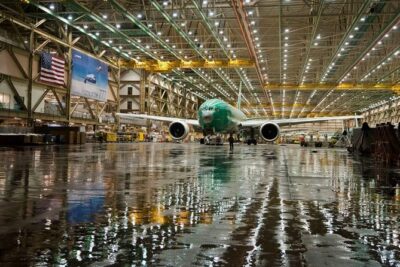
What you see on the day depends on active work and the official route. That uncertainty is part of the nature of a working plant. You might see a 777X in production, a Dreamliner at a different stage, or aircraft waiting for the next step. The tour does not promise a particular plane at a particular station, so book this for the factory setting and production process rather than one guaranteed aircraft.
The most useful way to approach the visit is to watch for the contrast between human work and giant machines. Individual workers may be handling precise tasks around an aircraft that looks far too large to have been built indoors. That contrast explains why the Boeing visit appeals even to people who do not collect aircraft facts.
More Boeing factory tours near Seattle:
- Boeing Factory Tour with Guided Transport from Seattle
★ 4.5 · 1,247 reviews - Boeing Factory Tour with Private Group Transport from Seattle
★ 4.5 · 13 reviews - Boeing Factory Tour & Seattle City Tours Combo
★ 4.5 · 11 reviews
The 45-minute ride from downtown Seattle
Pickup is at the Charter Bus zone beside the Hyatt Regency, on the east side of 8th Avenue between Olive and Stewart Streets. Arrive about 15 minutes early. If you get there before the coach, the Hyatt has an espresso shop on the second floor where you can wait with coffee or a pastry.
The Everett plant is about 35 miles north of downtown, and the ride usually takes around 45 minutes. That transfer is more than a simple shuttle when you have a guide who enjoys the subject. James Grindell has been praised for filling the drive with Boeing facts, William Boeing’s early story, Seattle trivia, and details about how the Everett complex developed. Matthew has also been singled out for mixing aviation information with humor and music, while DC is known for detailed commentary.
The quality of the ride can shape your opinion of the whole half-day. On a quiet transfer, you would simply be watching the road. With a lively guide, you get an introduction before arrival and a chance to ask questions without the time pressure of the factory route.
The coach also removes the nuisance of getting to Everett on your own. Public transport may cost less than the full package, but you would lose the dedicated guide and organized connection. If you are staying downtown and want an easy outing, the transport helps justify the $125 price.
Some guides offer several downtown drop-off choices on the return. Ask about this during the ride, since it may save you a walk back to the Hyatt after a long afternoon.
Entering the world’s largest building
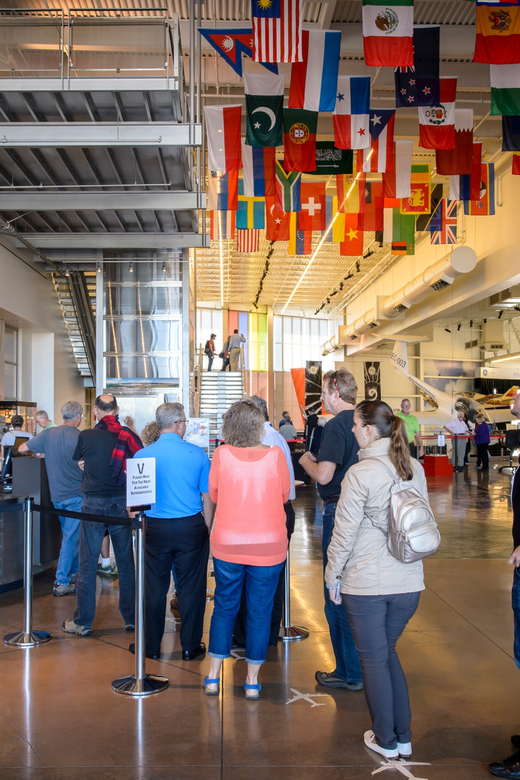
At Boeing Future of Flight, you first deal with the practical side of the factory visit. The factory tour is hands-free. You cannot take a purse, handbag, waist pouch, backpack, phone, tablet, camera, video equipment, drone, binoculars, food, or drink inside.
Complimentary lockers are available in the lobby, and belongings can also be left in the locked tour shuttle according to the instructions provided. Empty your pockets before the factory portion begins. It is frustrating to discover that one small item has to be dealt with at the last moment, and the security rules are strict for a reason.
Once inside, the scale arrives before the details do. The building is so vast that the planes can look like models from the viewing galleries. The elevated perspective helps you understand the full shape of an aircraft and the amount of equipment required to work around it.
The tour involves about 1,600 feet, or 500 meters, of walking. You also need to manage 21 stairs, although elevators are available and wheelchair access can be arranged with advance notice. There are no restrooms during the roughly 1.5-hour factory tour, so use the facilities at Future of Flight beforehand.
What you actually see on the factory tour
The biggest strength of the Boeing visit is the view into final assembly. You look across the work area rather than walking freely among the planes, so the experience is controlled and safe but not hands-on.
That distinction is important. One past visitor expected something closer to a space center exhibit, where you can touch hardware or enter capsules. This is different. You are observing an active industrial operation from designated areas. The factory portion may provide only a limited amount of close viewing, and some visitors find the official commentary lighter on technical detail than expected.
Still, the sight of a commercial jet in pieces is hard to match. You can watch how large sections become an aircraft, see work platforms surrounding the fuselage, and compare planes at different points in the process. The Boeing guide explains what you are seeing, while the overhead view lets you take in the size of the operation.
The Strato Deck adds a welcome change of pace. Here you can do some plane spotting and take photographs before or after the restricted factory section, according to the day’s instructions. The deck also gives you a better sense of the surrounding Boeing property. From that height, people appear tiny beside the aircraft.
The outside stops are where the Show Me Seattle guide may add something extra. James, in particular, has driven around perimeter roads to points that offer unusual views of the complex and aircraft. One outing even included a stop to watch the huge DreamLifter take off. That kind of bonus depends on timing, operations, and the guide, so treat it as a possibility rather than a promise.
Something different, still within Seattle:
- Beneath The Streets Underground History Tour
★ 4.5 · 8,006 reviews - Chef Guided Food Tour of Pike Place Market
★ 5.0 · 3,733 reviews - Mt. Rainier National Park Highlights Tour
★ 5.0 · 3,156 reviews - Seattle: Guided Underground Walking Tour
★ 4.6 · 2,144 reviews
Future of Flight, where the factory story widens
The Future of Flight Aviation Center gives you the part of the visit that a factory balcony cannot. Its exhibits look at aviation technology, aircraft design, and what flying may become.
The interactive displays help you place the assembly work in a larger context. You can also try a flight simulator and see a mockup of the Dreamliner interior. These features make the visit friendlier for children who meet the height rule and for family members who are less interested in factory mechanics.
The exhibits are useful, but time can be tight. The total activity lasts 270 minutes, or four and a half hours, including transport, the factory visit, and the aviation center. If arrival, security, or the official tour schedule takes longer than expected, you may have less time to explore Future of Flight on your own.
I would give priority to the factory viewing areas, then use the remaining time for the simulator and Dreamliner cabin. If you already know Boeing aircraft well, the interactive displays may feel basic. If this is your first factory visit, they help turn a big building full of parts into a story you can follow.
The gift shop is also here. Do not count on a long shopping window, since the schedule may move quickly. If souvenirs matter to you, keep an eye on the guide’s timing rather than waiting until the final minutes.
The guides can make or break the day
The official Boeing guide handles the factory section, but the Seattle guide sets the tone before and after it. That person drives the coach, provides the regional context, and often explains the Boeing story in a more personal way.
James Grindell is especially associated with high-energy aviation commentary and detailed Seattle background. He has been praised for sharing small facts, spotting aircraft, and taking extra care with questions. Matthew is another strong choice when available, combining clear information with an entertaining ride. DC has also earned praise for detailed explanations, and Casey has been noted for safe driving, local knowledge, and flexible drop-off choices.
You cannot assume a particular guide will operate your departure, and the experience should not depend on one personality. But if you are able to ask the operator about guide availability, it is reasonable to mention James, Matthew, or DC as guides whose aviation interest adds something to the ride.
The best guides do more than recite dates. They explain why Seattle became important to Boeing, how William Boeing’s interest in flight grew into a company, and how the Everett operation fits into the region. That background makes the factory easier to understand once you arrive.
Is $125 a fair price?
At $125 per person, this is not the cheapest way to reach Everett. The value comes from combining four things: downtown pickup and return, a comfortable coach, a live English-speaking guide, the official Boeing factory visit, and Future of Flight admission.
If you only want to enter the aviation center and can arrange your own transport, a cheaper option may exist. One person specifically noted that public transport could cost less. But that comparison leaves out the ride commentary, the organized timing, and the possible stops around the Boeing property.
I think the price works best for first-time visitors to Seattle, aviation fans, and anyone who would rather not plan a day around a distant industrial site. It is less compelling if you live nearby, have your own car, and mainly want a short look at an exhibit.
The trip also earns value from its convenience. You meet at a central downtown point rather than finding the plant yourself, and the guide keeps the day moving. Free cancellation up to 24 hours before departure and reserve-now, pay-later booking make it easier to fit into a changing Seattle schedule.
Who should book this Boeing experience?
You should book it if you like aircraft, engineering, manufacturing, or large-scale operations. You do not need to know the difference between every Boeing model. The basic thrill comes from seeing a jet being assembled inside a building of almost absurd size.
It also suits visitors who want an outing beyond Seattle’s central sights. The coach ride provides city and regional context, and the Everett visit gives you a look at a working part of the area’s economy and identity.
Families can take the tour if every child is at least 4 feet, or 122 centimeters, tall. Children under 16 need an adult, no babies are allowed, and carrying a child during the factory portion is not permitted.
Think carefully if you need frequent breaks, cannot climb stairs, or dislike strict security rules. The facility itself is accessible, with elevators and a limited number of wheelchairs, but the coach has no lift and requires you to climb three steps to board. Folding wheelchairs and mobility scooters can be stored, and you should request a wheelchair in advance.
Practical advice for a smoother visit
Wear comfortable shoes for the 500-meter walk and stairs. Use the restroom before the factory tour, because there are no facilities during that section.
Keep your packing simple. A phone may be useful on the bus, but it cannot enter the factory. Leave cameras, binoculars, bags, food, and drinks ready for storage before the tour begins.
Arrive 15 minutes before departure at the Hyatt Regency pickup zone. The meeting point is outside along 8th Avenue, not inside the hotel, though the nearby coffee shop is a useful waiting spot if you arrive early.
Do not plan a tightly timed appointment immediately after the tour. The advertised duration is 270 minutes, and the factory schedule can include waiting between arrival and the official start. Give yourself some breathing room for the return to downtown.
Should you book it?
Book this tour if you want the easiest way to see Boeing’s Everett operation from Seattle, especially if the scale of aircraft production is the main attraction. The guides, particularly James, Matthew, and DC when available, can add much more to the ride than a basic transfer would.
Skip it if you expect to walk among the planes, touch aircraft, take photos inside the factory, or spend a long time with the aviation exhibits. The factory visit is controlled and observation-based, and the Future of Flight portion may feel brief.
For most aviation fans, the sight of real aircraft in production makes the $125 worthwhile. For everyone else, it is still a strong half-day outing, but only if you are comfortable with the hands-free rules and the fact that the factory is seen from viewing areas rather than the floor.
FAQ
How long does the Boeing factory experience last?
The full activity lasts 270 minutes, or about four and a half hours. This includes pickup and return transportation from downtown Seattle, the factory visit, and time at the Future of Flight Aviation Center.
Where is pickup in downtown Seattle?
Pickup is at the Charter Bus zone beside the Hyatt Regency, along the east side of 8th Avenue between Olive and Stewart Streets. Arrive 15 minutes before departure.
Can I bring my phone or camera into the Boeing factory?
No. Phones, tablets, cameras, video equipment, drones, binoculars, purses, backpacks, food, and drinks are not allowed inside the factory. Complimentary lockers are available, and belongings may also be stored in the locked tour shuttle as directed.
How tall must children be to take the factory tour?
Children must be at least 4 feet tall, or 122 centimeters, to enter the Boeing Factory. Children under 16 must be accompanied by an adult, and babies are not allowed.
Is the tour wheelchair accessible?
Boeing Future of Flight and the factory tour have accessibility features, including elevators. The Show Me Seattle coach does not have a wheelchair lift, and you must climb three steps to board. Folding wheelchairs and mobility scooters can be stored, and a limited number of wheelchairs are available at Future of Flight with advance notice.
Can I use a restroom during the factory tour?
No. Restrooms are available at the Future of Flight Aviation Center, but not during the approximately 1.5-hour factory tour. Use the restroom before entering the factory.
Just added around Seattle
- Native Culture – Suquamish and Chief Seattle★ 5.0 · 3 reviews
- Break It and Make It: A Glass Fusing Session in Everett★ 4.5 · 3 reviews
- Bainbridge Island Discovery and Wine Tour★ 5.0 · 3 reviews
- Seattle: Twilight Tour and Olympic National Park★ 5.0 · 3 reviews
- Beaches, Bites and Bavaria in Leavenworth: A Self-Guided Audio Tour★ 3.5 · 3 reviews
- Seattle: Lake Union Happy Hour Cruise★ 3.7 · 3 reviews
- Seattle: Lake Union Kayak Tour – Small Groups, Big Views★ 5.0 · 3 reviews
- Sail Bainbridge Island & Seattle Waters – Classic Sailboat★ 5.0 · 3 reviews
Boeing Factory Tours, compared.
Boeing Factory Tour with Guided Transport from Seattle
Read our review →
Boeing Factory Tour with Private Group Transport from Seattle
Read our review →
Browse the lists this tour appears in